WHAT IS HINOKISHIN?


Hinokishin and the True Meaning of Prevention

In the medical and dental fields, there is a strong consensus that prevention is the most important aspect of health care. Yet, in practice, most attention and resources are devoted to treatment after disease has already occurred. Preventive care, though essential, often takes a back seat—partly because it is less profitable for the healthcare system than treating established illness.

Some may ask, What does this have to do with religion?

In the Tenrikyo faith, church leadership often encourages community service such as cleaning parks, beaches, and participating in disaster relief efforts. These acts are done under the name of hinokishin, with the hope that such visible good deeds will help spread the teachings of Tenrikyo.

However, it is important to ask: What is the true meaning of hinokishin?

Interestingly, the term “hinokishin” does not appear in the Ofudesaki, the most sacred scripture of Tenrikyo. But it does appear in the 12 Songs of the Mikagura-uta, and the context there is illuminating. In the Mikagura-uta, hinokishinrefers to the spreading of the teachings to others—specifically, the teachings of the soul, the pure mind, and God’s guidance.

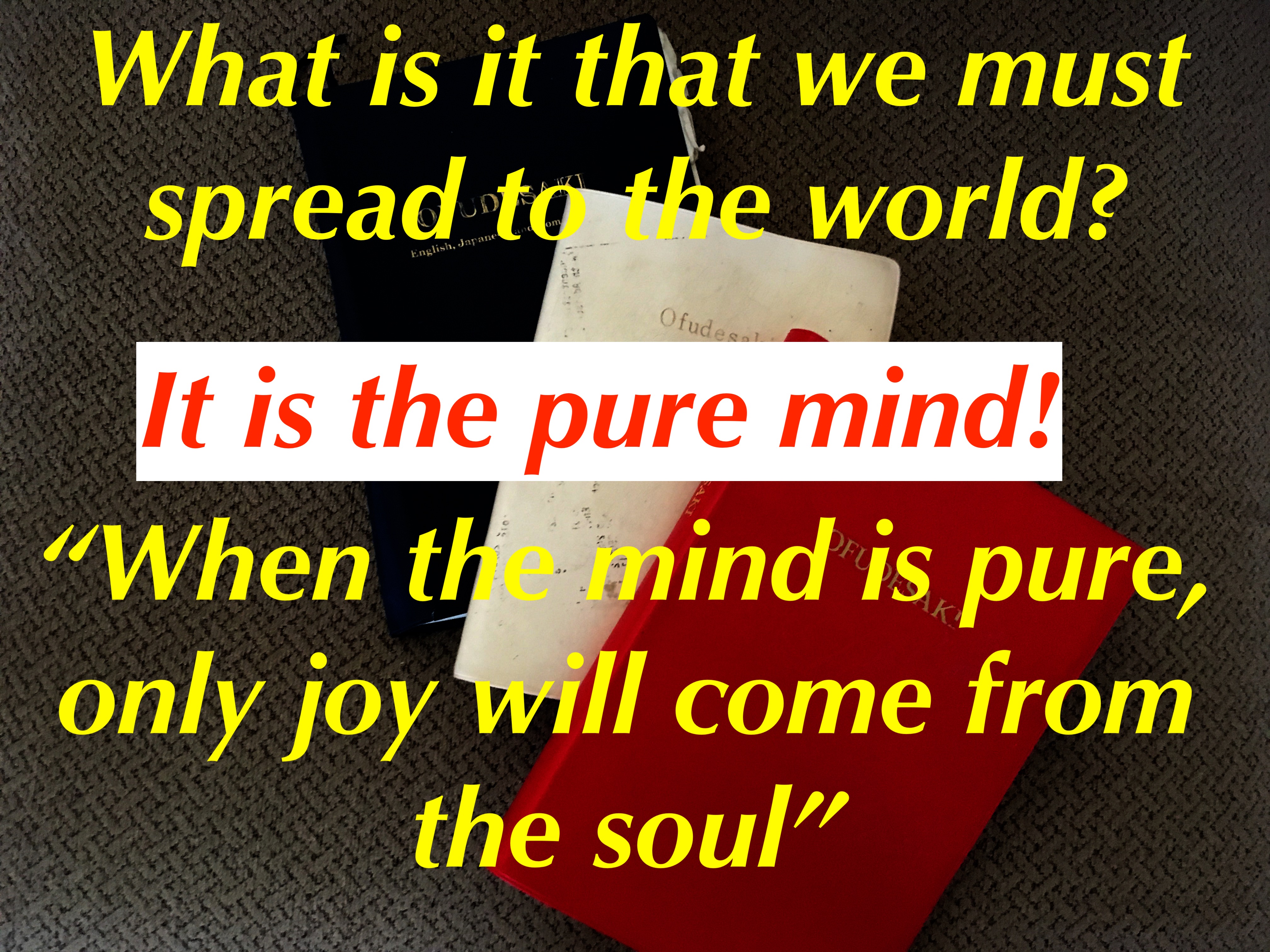
This makes sense when we consider the idea of prevention. Our teachings emphasize that when the mind is purified, only joy will come from one’s own soul. In other words, purifying the mind can prevent illness, suffering, and disaster from occurring in the first place.

But instead of focusing on prevention, many of our current activities are aimed at treating existing conditions—such as assisting in hurricane relief or helping people recover from tragedy. These acts are certainly compassionate and important, but they are reactions to suffering that has already appeared.

The true mission of Tenrikyo is not merely to respond to suffering, but to prevent it entirely by spreading God’s truth and helping people understand their souls. This is the most important hinokishin we can perform—helping others purify their minds before illness and disaster arise.

Prevention is the highest form of care, whether in medicine or in faith. By sharing God’s teachings clearly and compassionately, we carry out the ultimate hinokishin: a mission to prevent suffering before it begins.

Posted in Tenrikyo | 1 Comment

Why God’s teaching is not spreading to the world.

Why is God’s teachings not spreading to the world?

Posted in Tenrikyo | Leave a comment

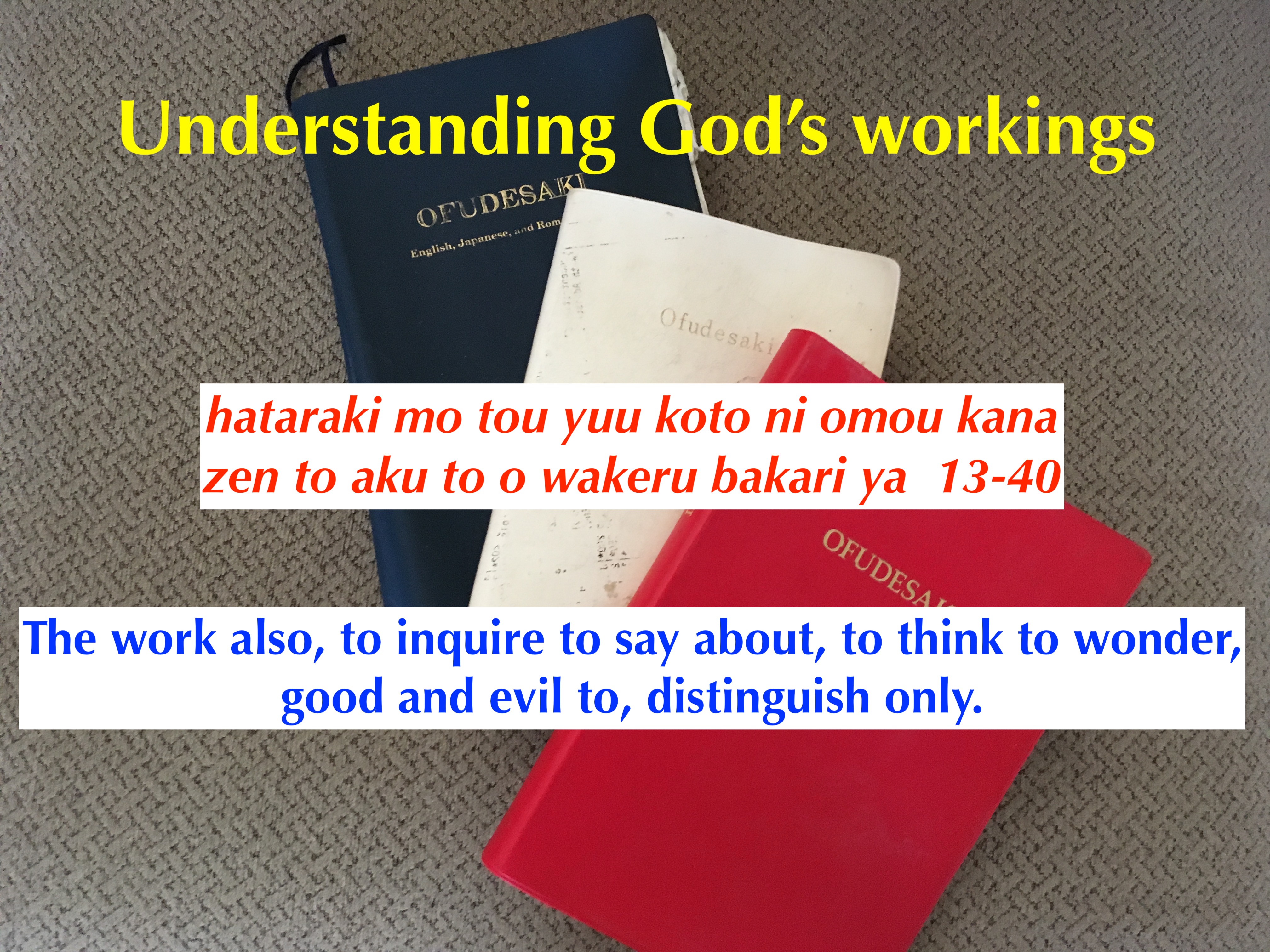
OFUDESAKI 13-40

God to distinguish good and negative thoughts by placing different illnesses, depending on the amount and kind of thoughts one has.

Posted in Tenrikyo | Leave a comment

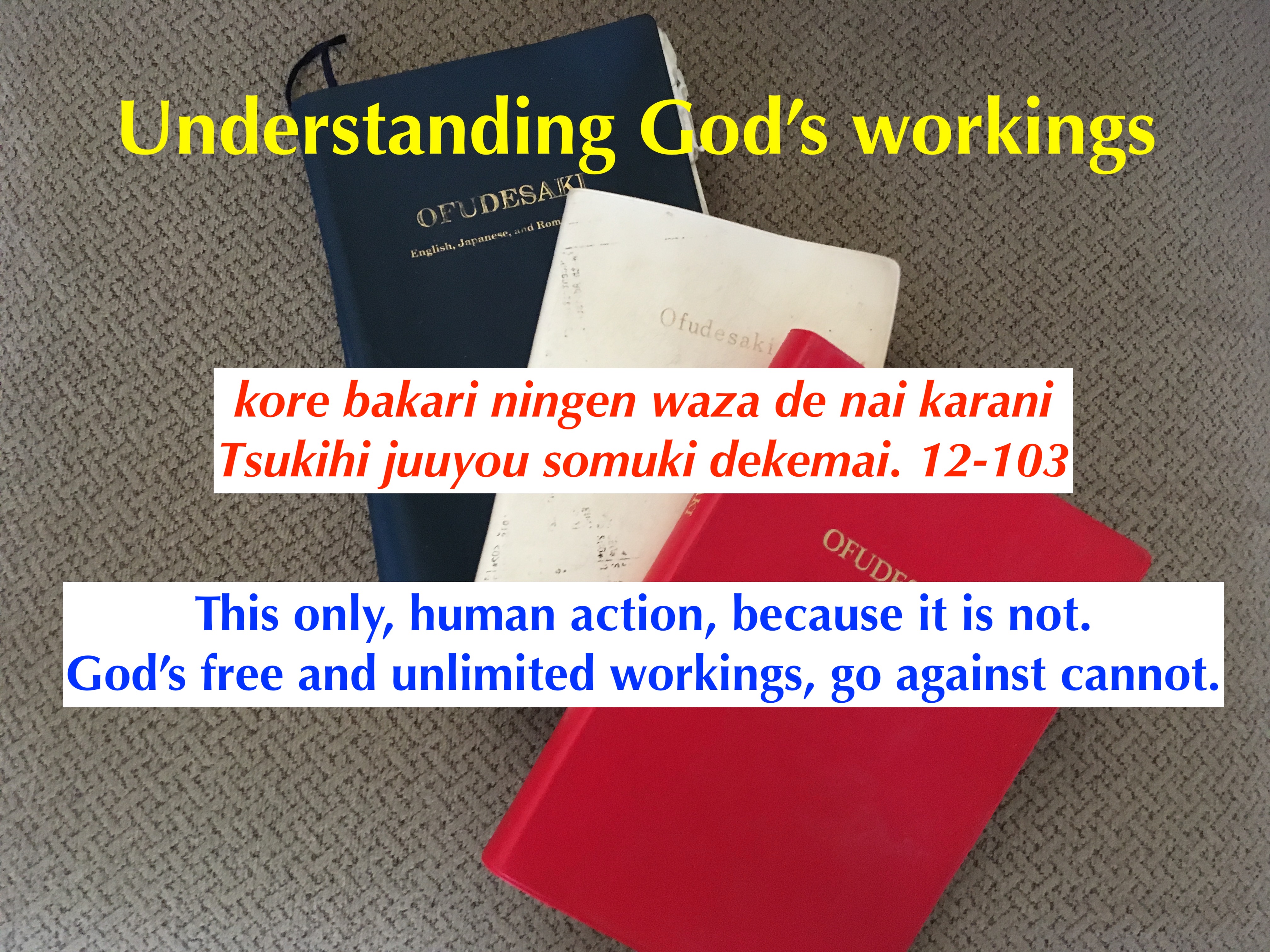
OFUDESAKI 12-103

Posted in Tenrikyo | Leave a comment

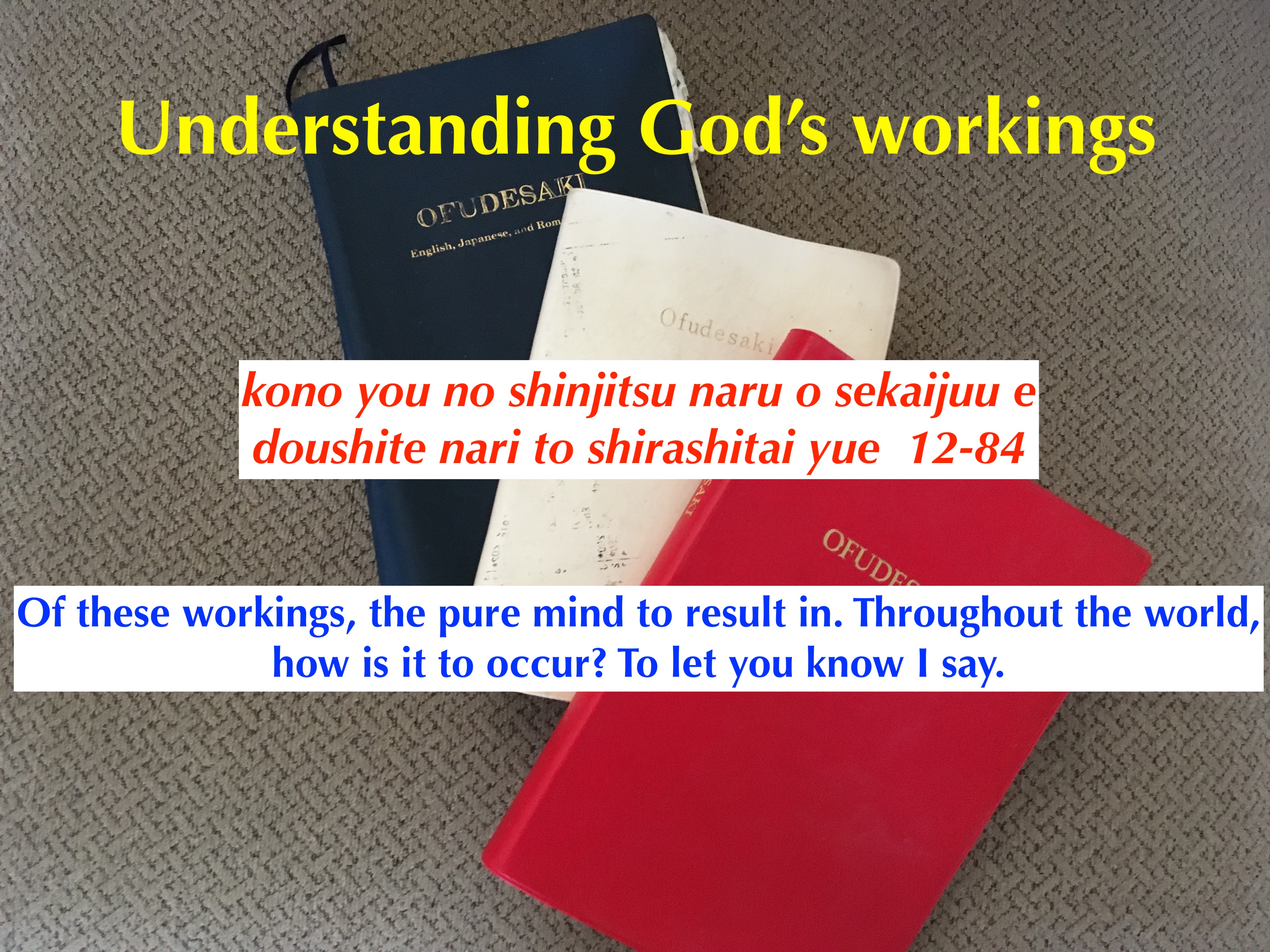
OFUDESAKI 12-84

Posted in Tenrikyo | Leave a comment

OFUDESAKI 12-84

God placing illness as guidance to help one understand one’s own soul, to purify the mind. When the mind is purified, only joy will appear from one’s own soul!

Posted in Tenrikyo | Leave a comment

WHAT MUST WE SPREAD TO THE WORLD

Posted in Tenrikyo | Leave a comment

PURPOSE OF OUR RELIGION

Posted in Tenrikyo | Leave a comment

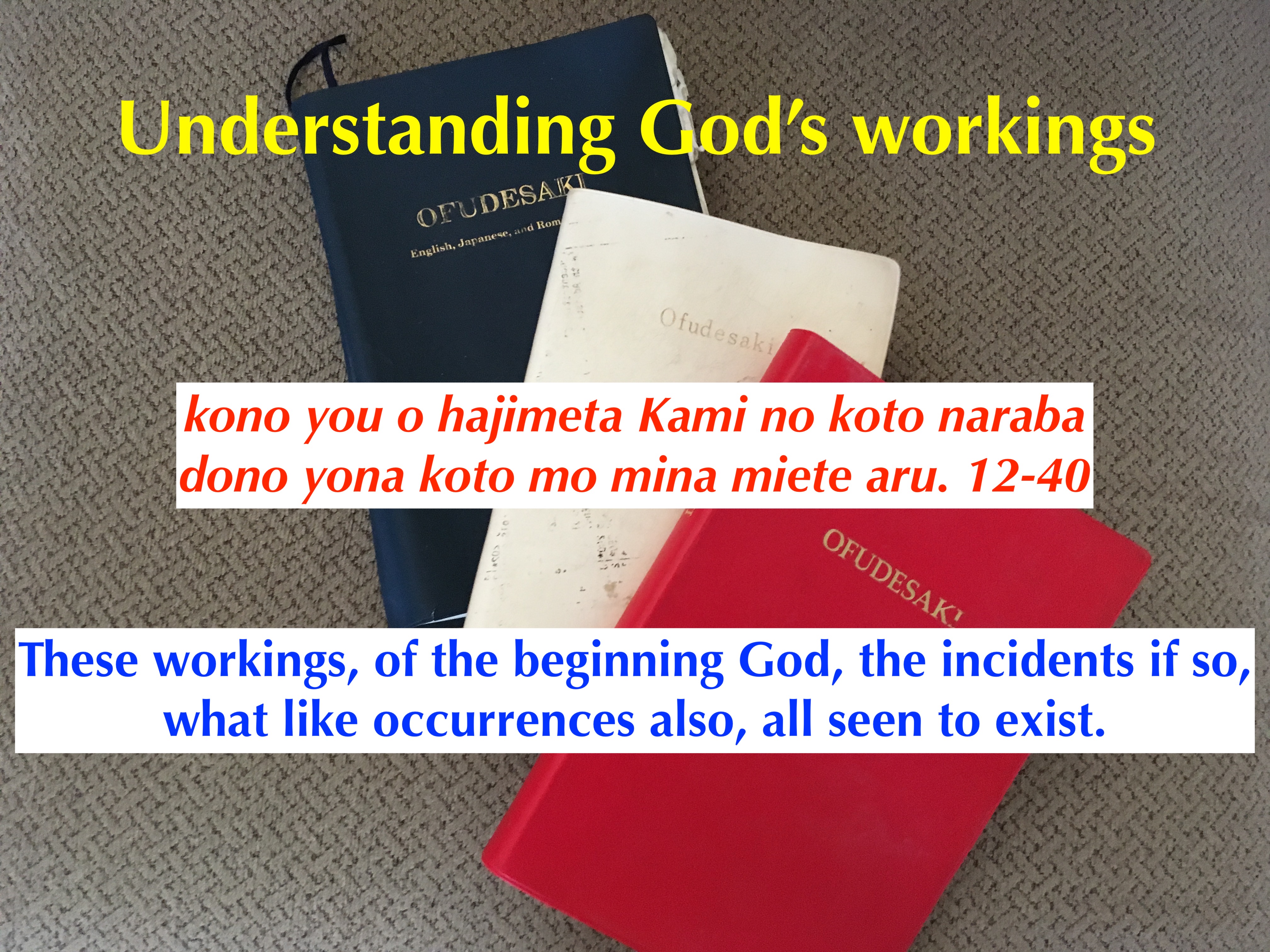
OFUDESAKI 12-40

Posted in Tenrikyo | Leave a comment

The Pure mind

Understanding and Removing Negative Thoughts: A Closer Look Through the Ofudesaki

In the Ofudesaki, God tells us to remove our negative thoughts. When our minds become pure, only joy will arise from our own souls, and we will feel spirited and full of life.

But as simple as that sounds, it’s not always easy to do. Let me explain with an analogy.

The Mind as a Painting

Imagine standing in front of a beautiful, intricate painting. At first glance, you may feel moved by its beauty, but you may not immediately understand what the artist intended to express. To uncover the painter’s true objective, you must study each part carefully, analyzing color, texture, composition, and symbolism—until the full meaning begins to emerge.

In the same way, God tells us to remove our negative thoughts. We may understand the general idea of what negative thoughts are, but it’s not always clear how to identify them in our own minds, especially when they are subtle, deeply rooted, or disguised as “normal” thinking.

Words Alone Are Not Always Enough

Often, hearing or reading “remove negative thoughts” is not enough to truly transform our thinking or behavior. Words alone may not give us the inner clarity or motivation needed to recognize what we are holding on to. That’s why we must take the time to examine our own thoughts carefully—like analyzing a painting—so that we can recognize, name, and release the ones that cause suffering.

So What Are These Negative Thoughts?

Let us now take a closer look at the specific negative thoughts that God wants us to remove, as revealed in the Ofudesaki. These thoughts are the “dusts of the mind” that cloud our spiritual clarity and cause suffering both to ourselves and others.

By naming them and understanding how they appear in daily life, we can begin the real process of purification—one step at a time.

The Dusts of the Mind (From the Ofudesaki)

Regret (oshii):
This is the feeling of being disappointed in others.
How often does regret arise in our daily lives?
Regret toward a spouse, children, or coworkers?
We must remember: everyone makes mistakes.
This feeling of regret is one of the dusts of the mind that we must work to remove.

Covetousness (hoshii):
This is the strong desire for a person or thing.
Often, this desire comes at the cost of others’ feelings.
Sometimes, people even hurt others in the process of trying to get what they want.
This is another form of dust that clouds our minds.

Self-love (kawaii):
This is the tendency to think only about oneself,
as if the world revolves around you, while forgetting the existence and feelings of others.
It’s a form of self-centeredness that blinds us to those around us.

Greed (yoku):
This is the desire to have more than what is necessary.
It often leads people to seek material gain at the expense of others. Greed, too, leads the mind away from purity and toward suffering.

Arrogance (kouman):
This is the belief that you are superior to others,
leading to a mindset that finds fault in others.
But God reminds us clearly:

“All people are equal.”
We must never forget this truth.

Why Must We Remove These Thoughts?

In the Ofudesaki, God teaches us that:

When these thoughts are in our minds, we will eventually act upon them.

This is why it is so important to remove them completely.
When the mind becomes pure, only joy will come forth from our soul,
and we will be able to live the Joyous Life God intends for all of us.

Posted in Buddhist, Christian, Christianity, From God, God's truth, heaven's truth church, Hindu, karma, Ofudesaki, Original pure mind, Protestant, Religion, soul, sufferings, Tenrikyo, The five sins to avoid, Understand Your Soul | Tagged , , , , , , , , | Leave a comment