Negative thoughts

How Do We Remove Our Negative Thoughts?

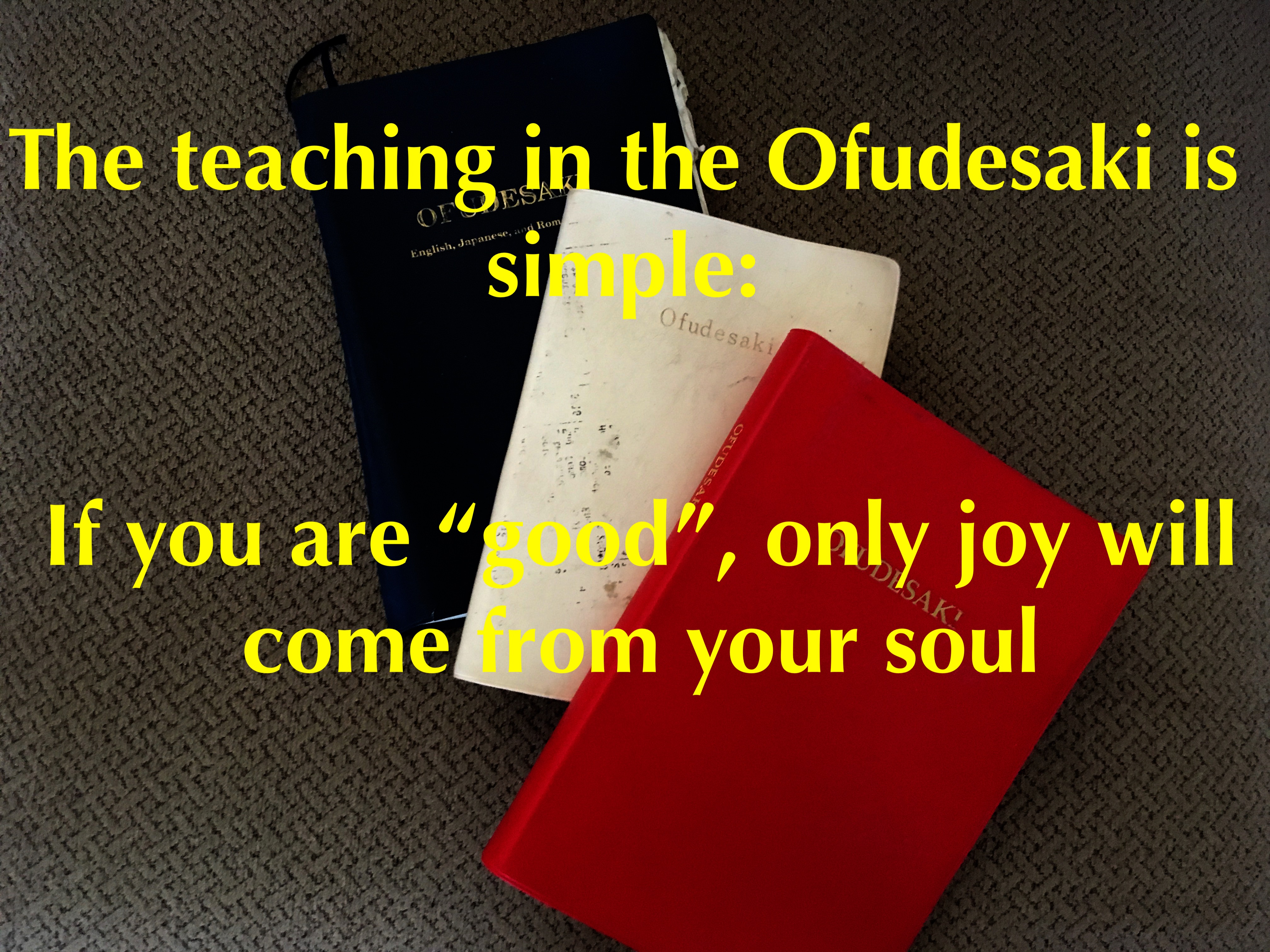
God teaches that if we remove our negative thoughts, we will be saved. When the mind becomes pure, only joy will come from our own soul. But what exactly are these negative thoughts we need to remove? God identifies them in the Ofudesaki, but do we truly understand them in relation to ourselves?

It’s like admiring a beautiful painting and saying how enlightening it is, yet failing to understand the message the artist is trying to convey. Similarly, we often recognize the words—regret, covetousness, self-love, greed, and arrogance—but do not fully grasp how these negative thoughts actually exist within us.

So why does God want us to remove them?

Because these thoughts give rise to negative emotions—such as anger, lust, uncontrollable urges, and deep cravings—which we are often tempted to act upon. When we act on these emotions, we hurt others and eventually bring suffering back upon ourselves, as it returns to us from our own soul as karma.

Some may ask, “Why aren’t emotions like anger, grudges, or hatred listed as negative thoughts?” It’s because these are not the root thoughts—they are actions or emotional reactions that come from negative thoughts like arrogance and regret. Anger, hate, and grudges are responses to emotions that are born from deeper thoughts rooted in impurity. This is why they are not listed as separate negative thoughts in the Ofudesaki.

So how do we begin to recognize and remove our own negative thoughts?

First, we must calm our minds whenever strong emotions arise. In those moments, we must reflect deeply and ask ourselves: “Which negative thought is this emotion coming from?” Then, we must refrain from acting on the emotion and make a conscious decision to eliminate the root thought behind it.

This is the only way to purify the mind.

God compares this process to digging up a root. It’s hard work, but once the root is removed, only joy will come from within. The effort is great, but so is the reward: a mind free from suffering and a life filled with joy, flowing naturally from a purified soul.

どうすれば心のほこり(負の思考)を取り除けるのでしょうか?

神様は、「負の思考を取り除けば、たすかる」と教えられています。心が澄めば、自分の魂からは喜びしか現れないのです。では、その「取り除くべき思考」とは何でしょうか? 神様は「おふでさき」でそれを教えてくださっています。しかし、私たちはそれを自分自身と結びつけて本当に理解しているのでしょうか?

それはまるで一枚の絵画のようです。私たちはその美しさに感動して「素晴らしい」と言っても、その作者が伝えようとした本当のメッセージは理解していない。同じように、「悔しさ(後悔)、ほしがり(欲望)、かわいがり(自己愛)、よく(貪欲)、こうまん(高慢)」という負の思考も、自分の中にあるそれらを認識しなければ、本当の意味では理解できていないのです。

では、なぜ神様はこれらの負の思考を取り除いてほしいとおっしゃるのでしょうか?

それは、これらの思考が必ず「負の感情」を生むからです。そして、その感情に私たちはしばしば反応してしまいます。たとえば怒り、欲望、抑えきれない衝動や執着など――これらは反応することがとても難しい感情です。感情に従って行動すれば、他人を苦しめるだけでなく、いずれは自分自身にも苦しみが返ってくるのです。それは、自らの魂から生まれてくるものなのです。

「なぜ怒り、うらみ、憎しみが負の思考として挙げられていないのか」と疑問に思う人もいるかもしれません。それは、それらが「思考」ではなく、「行動」だからです。

怒り、うらみ、憎しみといった行動は、「こうまん(高慢)」や「くやしさ(後悔)」といった負の思考に由来する感情に対する反応なのです。だからこそ、神様は「思考」としてはそれらを挙げておられないのです。

では、どうすれば負の思考を認識し、取り除けるのでしょうか?

まず大切なのは、感情が湧き上がったとき、心を静めることです。怒りや悲しみ、欲望などの感情が出てきたとき、それが**どの負の思考から来ているのかを心でよく思案する(かんがえる)**ことが必要です。

そして、その感情に従って行動しないこと。そして意識的に、「この感情のもとになっている負の思考を取り除こう」と心に決めるのです。

これ以外に、負の思考を取り除く方法はありません。

神様は、心の浄化を「根を掘る」作業に例えられています。根を掘るのは簡単ではありません。しかし、掘り終えたとき、そこからは喜びしか生まれないと教えられています。
Posted in Tenrikyo | Leave a comment

If you are good, only joy from your soul

Posted in Tenrikyo | Leave a comment

YOUKI-TSUTOME

Why the Teachings of the Ofudesaki Are Not Spreading — A Reflection on the Youki-tsutome

God teaches us in the Ofudesaki that when our minds are pure, we are saved. From a pure mind, only joy will come—joy that arises from our own soul. God tells us clearly which negative thoughts we must remove: regret, covetousness, self-love, greed, and arrogance. This understanding is what God wants us to attain and share with the world.

But we also know how difficult it can be to change people’s hearts and minds. Just explaining God’s teachings to others is often not enough. This is why God granted us a powerful prayer: the Youki-tsutome. Through this special Service, God promises that there will not be one failure in a thousand—if it is performed exactly as instructed. So what happens when our prayer is accepted?

God will place illness as guidance upon those we have shared the teachings with. This illness is not a punishment, but divine guidance—a way for people to recognize the workings of their own souls and begin purifying their minds. This is God’s guarantee.

Some of those who receive this guidance will understand. These people are referred to as nihon. They will come to our places of worship, receive the Osazuke for healing, and be further instructed in the way to purify their minds. And once their minds become pure, only joy will come from their souls.

Others, however, may not understand the illness as guidance. They may reject the teachings and continue with selfish behavior. God calls these people kara. But God still asks us to continue spreading the teachings to them—so that eventually, they too may become nihon.

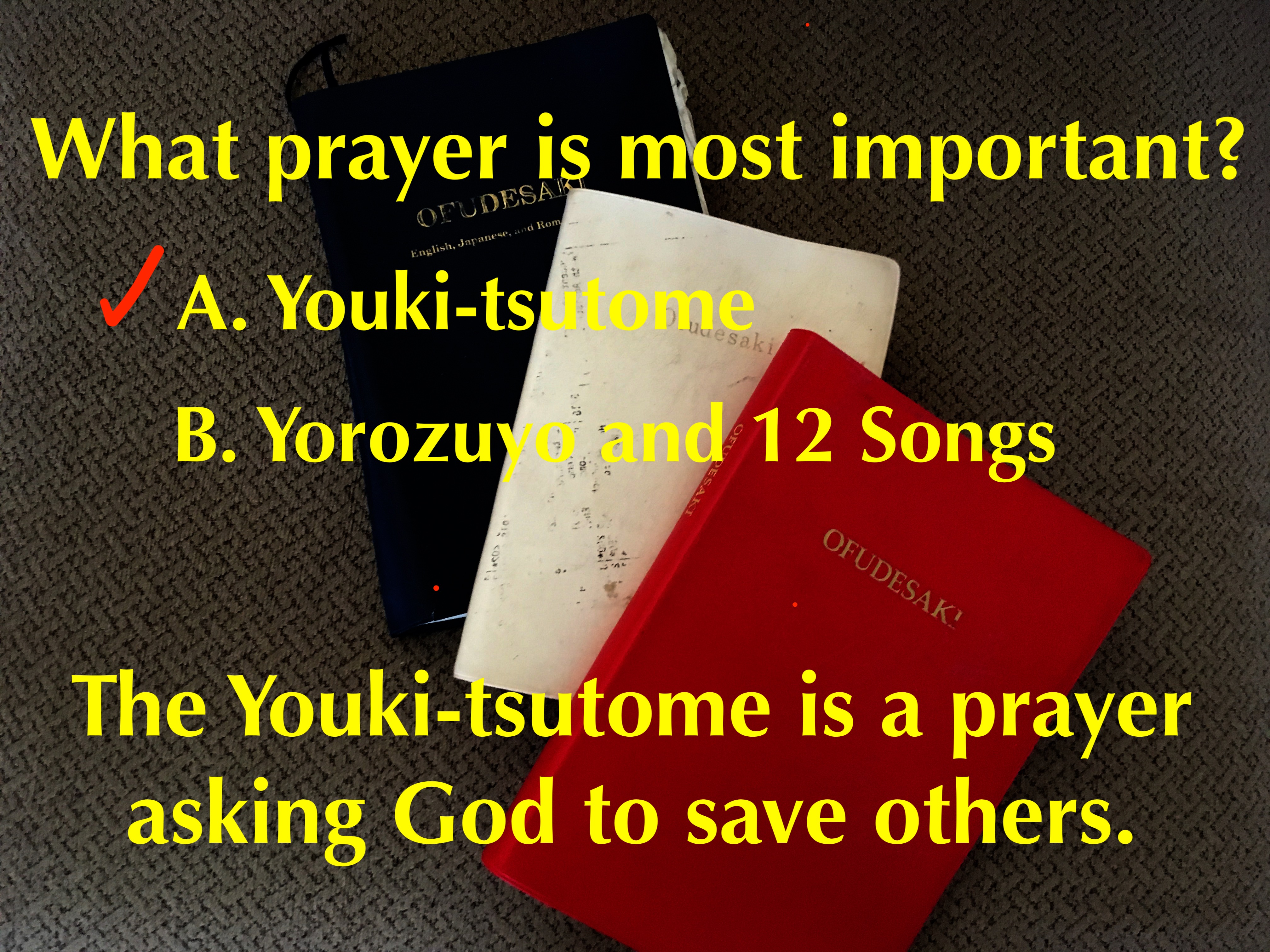
Unfortunately, I believe the teachings of the Ofudesaki are not spreading because many followers misunderstand the purpose of the Youki-tsutome. Some believe it is a prayer to sweep away our own negative thoughts. But God has already told us how to remove our negative thoughts in the Ofudesaki. The Youki-tsutome is not a prayer for ourselves—it is a petition to God to save others whom we have introduced to the teachings.

Some may ask: What about the Yorozuyo and the 12 Songs? These are not mentioned in the Ofudesaki. Oyasama created them to help the early followers understand and remember the teachings—a kind of summary of the sacred scripture. They were valuable tools at the time.

So why are these songs and dances now emphasized over the Youki-tsutome? Unlike the Youki-tsutome, the Yorozuyo and 12 Songs are not even a prayer. Yet, I hear church leaders insist that we must perform these time-consuming ceremonies perfectly in order to receive blessings. Why are we dancing before the shrines and reciting God’s words back to God?

These are questions we must seriously ask each other.

And finally—why are the teachings of the Ofudesaki not reaching the world? Could it be that we have forgotten the true purpose and power of the Youki-tsutome?

なぜ「おふでさき」の教えが世界に広まらないのか ― ようきつとめについての考察

神様は「おふでさき」の中で、kokoro (mind) が澄めば人はたすかると教えられています。Kokoro (mind) が澄みきったとき、自分の魂から喜びだけが生まれるのです。神様は、取り除くべき思考として次の五つを示されています:くやしさ(後悔)、ほしがり(欲望)、かわいがり(自己愛)、よく(貪欲)、こうまん(高慢)。これこそが神様が私たちに理解してほしいことであり、世界に広めてほしいと願っておられることです。

しかし私たちも、人の kokoro (mind) を変えることがどれほど難しいかを知っています。多くの場合、ただ神の教えを話すだけでは、人々は kokoro (mind) を澄ます気持ちにはなりません。だからこそ、神様は私たちに特別な祈り、**ようきつとめ(陽気つとめ)**を授けてくださいました。

神様はこのつとめを正しくおこなえば、千に一つも失敗はないと約束してくださっています。それでは、私たちの願いが受け取られたとき、神様は何をしてくださるのでしょうか?

神様は、私たちが教えを伝えた人々に「病気」というかたちの「さとし(導き)」を与えてくださいます。 これは罰ではありません。彼らの魂の働きを理解し、自らの kokoro (mind) を澄ますきっかけとなるように与えられる、愛のある導きです。

この「さとし」を理解できる人もいます。神様はこのような人々を**「にほん」**と呼ばれます。彼らは私たちの教会に訪れ、おさづけを受けて病を癒やされ、kokoro (mind) を澄ます方法をさらに学びます。kokoro (mind) が澄めば、魂からは喜びだけが生まれます。

しかし一方で、「さとし」としての病を理解できず、教えを拒み、自己中心的な行動を続ける人もいます。神様はそのような人々を**「から」**と呼ばれます。それでも神様は、私たちにその人たちにも教えを伝え続けるようにと仰せです。やがて彼らも「にほん」になることができるからです。

残念ながら、「おふでさき」の教えが世界に広がっていないのは、この「ようきつとめ」の意味を誤解しているからではないかと私は思います。多くの人が、このつとめは自分自身のほこりを掃除してもらう祈りだと信じています。しかし、私たちはすでに「おふでさき」の中で、どのように心のほこりを取り除くかを教わっているはずです。

ようきつとめは、自分のための祈りではありません。他人をたすけるための祈りです。

では、「よろづよ」と「十二のうた」はどうでしょうか? これらは「おふでさき」には書かれていません。これはおやさまが初期の信者たちに「おふでさき」の内容を理解してもらうために作られた、神の教えをまとめた手段です。

それなのに、なぜ今日の信者たちは「ようきつとめ」よりも、よろづよと十二のうたを重視しているのでしょうか? これらは祈りではありません。 なのに、教会の指導者たちは、「神様からたすかりをいただくには、この長い儀式を完全にやらなければならない」とまで言います。

なぜ私たちは神様の前で踊りながら、神様の言葉を神様に読み聞かせているのでしょうか?

これらは、私たちが互いに問い直すべき大切な疑問です。

そして最後に、なぜ「おふでさき」の教えは世界に広がっていないのか——それはようきつとめの本当の意味と目的を忘れてしまったからではないでしょうか。

Posted in Tenrikyo | Leave a comment

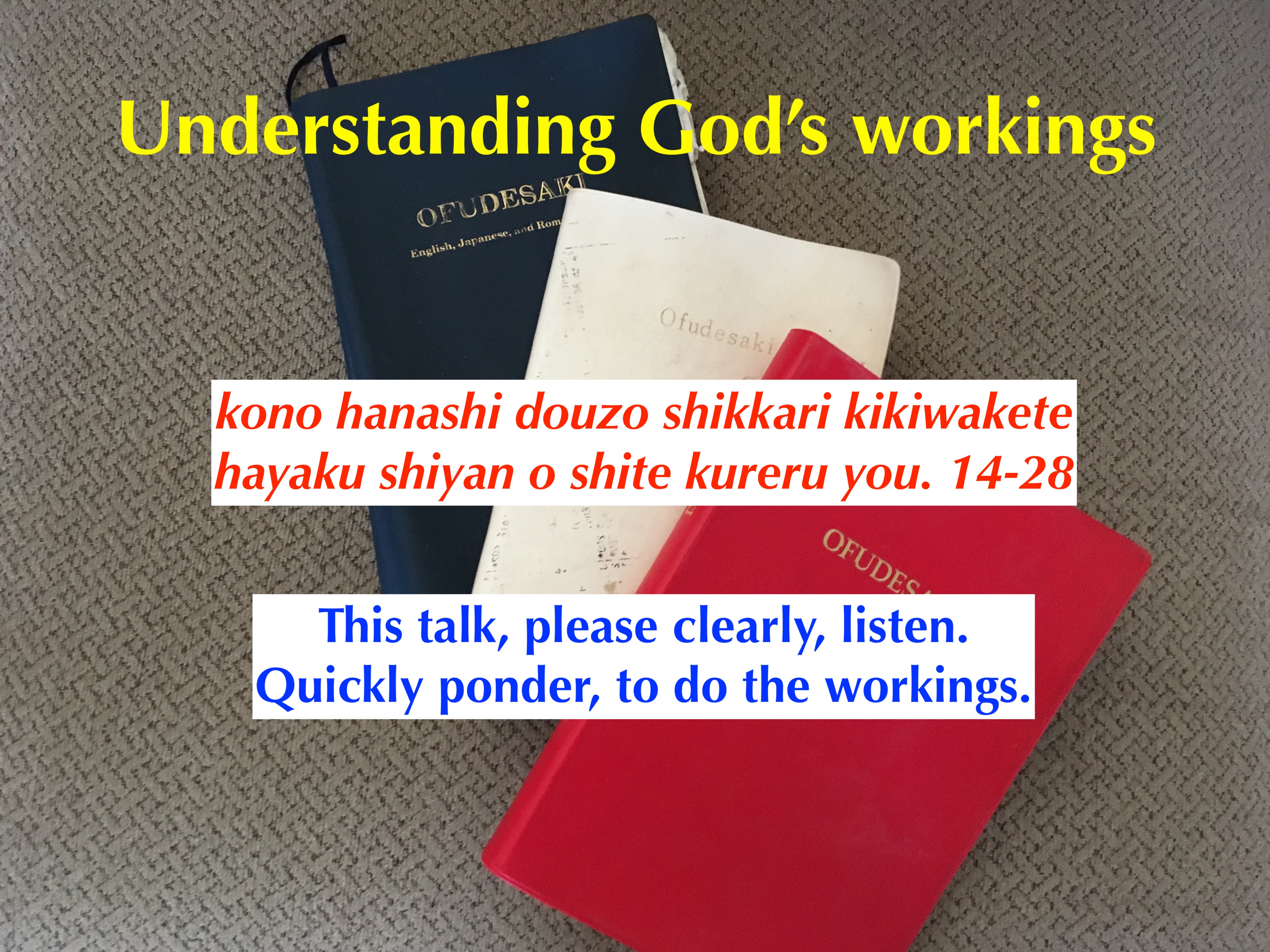
OFUDESAKI 14-28

Posted in Tenrikyo | Leave a comment

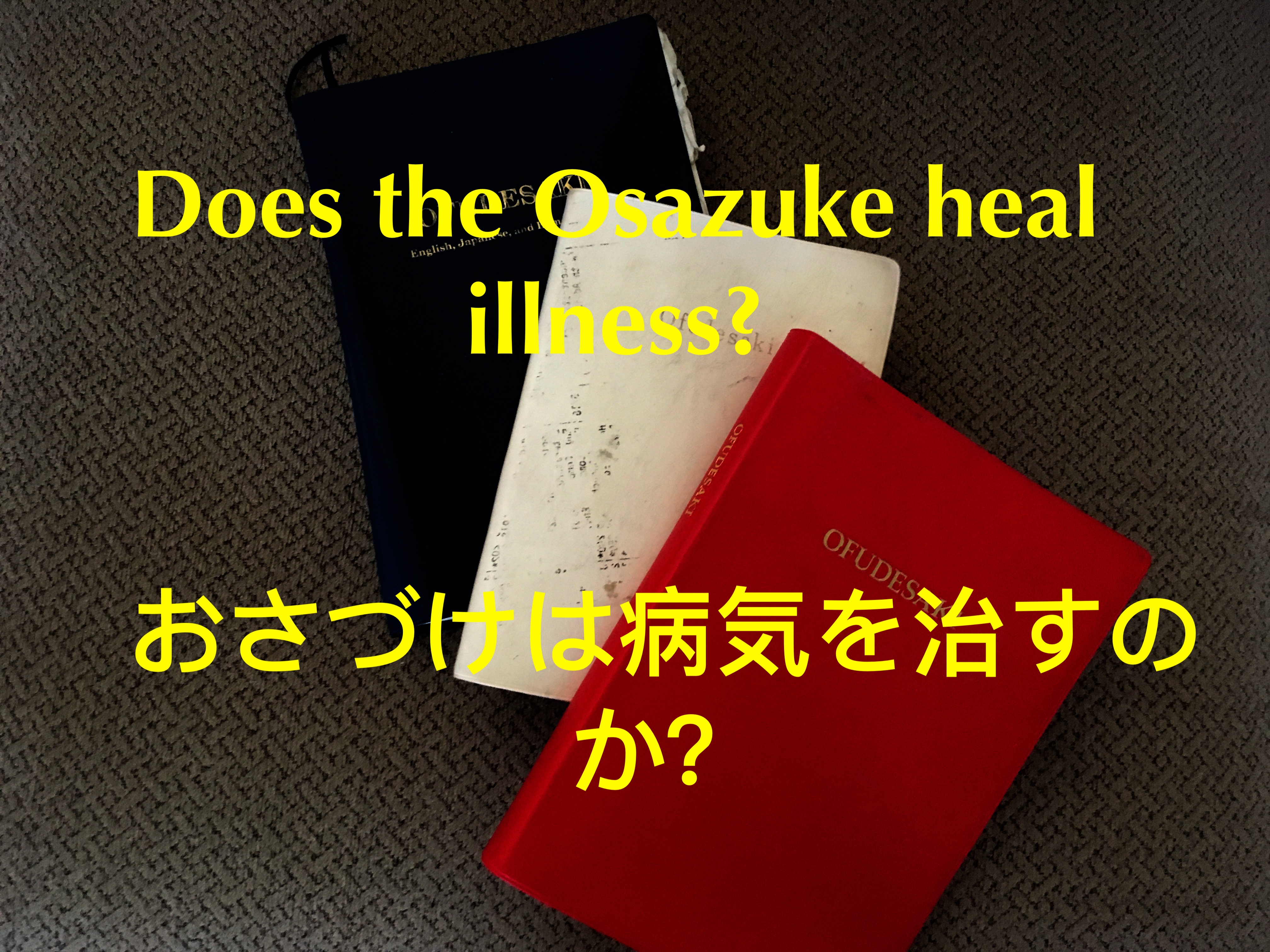
Does the Osazuke heal illness?

Understanding the True Effectiveness of the Osazuke

Many people believe that the Osazuke is effective in healing others—and I agree. But to truly understand how and when it is effective, we must first clarify where it may not be.

Let me begin with my personal experience. When both of my parents were nearing the end of their lives, a Tenrikyo bishop sincerely administered the Osazuke for each of them. Despite the heartfelt prayers, they both passed away. I also recall my mother often praying for others with the Osazuke when I was a child, but I honestly cannot remember any clear instances of miraculous healing.

On the other hand, I have heard testimonies from others who say they were able to heal people through the Osazuke. So, who is right?

To answer this, we must understand what the Osazuke is truly for.

The Osazuke is not intended to cure existing illness or advanced disease. We cannot simply go into a hospital, administer the Osazuke to people with cancer or other serious conditions, and expect physical healing to occur instantly. This is not how the Osazuke works, and doing so may lead to misunderstanding or disappointment.

So what is the purpose of the Osazuke?

In the Ofudesaki, God teaches us to spread the truth of the soul, the pure mind, and God’s guidance. When we share these teachings with others, God may place illness upon them—not as punishment, but as guidance. This guidance is meant to help individuals recognize the workings of their own soul, so they can begin the process of purifying their mind. It is a loving intervention, designed to awaken awareness and lead to spiritual growth.

When these people recognize the meaning behind their suffering and seek a way to purify their minds, they come to places of worship. It is then—after they’ve heard the teachings, experienced God’s guidance, and begun the process of self-reflection—that the Osazuke becomes effective.

We administer the Osazuke to those who are ready to receive God’s truth, and many are healed—not only physically, but spiritually. From there, we continue to share the teachings with them, and they, in turn, may help guide others.

This is how God’s teachings spread throughout the world.
This is how the Osazuke becomes a powerful tool—not for curing random illness—but for reinforcing the truth of the soul, the pure mind, and God’s guidance.

So please, do not administer the Osazuke indiscriminately to people with serious or long-standing illness and become disheartened when there is no apparent result. Understand the proper timing, context, and purpose of this sacred grant.

When used as God intended, the Osazuke is incredibly effective—not only in healing—but in awakening hearts, and in helping to build a world filled with health, happiness, and spiritual understanding.

おさづけの本当の効果を理解するために

多くの人々は、おさづけが人を癒す力を持っていると信じています。そして私も、それは真実だと思います。しかし、その効果を本当に理解するためには、「効果が現れにくい場面」についても明確にしておく必要があります。

まずは、私自身の経験をお話しします。私の両親が亡くなる直前、天理教の上級の先生が真心を込めておさづけを取り次いでくださいましたが、二人とも亡くなってしまいました。また、私が子供の頃、母がよく他人のためにおさづけをしていたことを思い出しますが、奇跡的な癒しが起きた記憶は正直あまりありません。

一方で、他の人たちからは「おさづけによって人が癒された」という証言を聞くこともあります。では、どちらが正しいのでしょうか?

答えは、「おさづけが本来何のためにあるのか」を理解することにあります。

おさづけは、すでに発症している重い病気や末期の病を癒すためのものではありません。私たちは病院に行って、がんなどの病気にかかっている人におさづけを取り次ぎ、その場で身体的な癒しが起こることを期待するわけにはいきません。おさづけとはそういう性質のものではなく、そのような使い方は誤解や失望を招く可能性があります。

では、おさづけの本当の目的とは何でしょうか?

『おふでさき』では、神様が「魂」「真実のkokoro (mind) 」「神の導き」の教えを他者に広めるよう私たちに教えています。この教えを人に伝えると、神様は時にその人に「病」という形で導きをお与えになります。これは罰ではなく、愛ある導きです。

この導きは、その人の魂の働きを気づかせ、Kokoro (mind) の浄化のプロセスを始めさせるためのものです。神様の深い親心による働きかけであり、霊的成長のための目覚めを促すものです。

こうして導きを受けた人が、自らの苦しみの意味に気づき、kokoro (mind) を澄ます道を求めて教会へ足を運びます。そして、教えを聞き、神の導きを受け止め、自省のプロセスを始めたときこそ——おさづけの効果が現れるのです。

そのような人に対しておさづけを取り次ぐと、多くの人が身体的にも、霊的にも癒されていきます。そして、その後も神の教えを伝え続けることで、癒された人自身が他の人を導く存在となっていくのです。

これが、神様の教えが世界に広がっていく仕組みであり、おさづけが本当に力を発揮する場面なのです。つまり、おさづけは「偶然の病を治すための手段」ではなく、「魂・心・導きの真理を証明する力強い道具」なのです。

ですから、長期的・深刻な病を抱えている人に無差別におさづけを取り次ぎ、結果が見えないことで落胆することは避けてください。この神聖な許しの正しい時機・文脈・目的を理解することが大切です。

神様が意図された通りに用いるならば、おさづけは非常に大きな効果を持ちます。ただ身体を癒すだけでなく、人々のkokoro (mind) を目覚めさせ、健康と幸福と霊的な理解に満ちた世界を築く力になるのです。

Posted in Tenrikyo | Leave a comment

OFUDESAKI 13-92

Posted in Tenrikyo | Leave a comment

WHAT IS HINOKISHIN?


Hinokishin and the True Meaning of Prevention

In the medical and dental fields, there is a strong consensus that prevention is the most important aspect of health care. Yet, in practice, most attention and resources are devoted to treatment after disease has already occurred. Preventive care, though essential, often takes a back seat—partly because it is less profitable for the healthcare system than treating established illness.

Some may ask, What does this have to do with religion?

In the Tenrikyo faith, church leadership often encourages community service such as cleaning parks, beaches, and participating in disaster relief efforts. These acts are done under the name of hinokishin, with the hope that such visible good deeds will help spread the teachings of Tenrikyo.

However, it is important to ask: What is the true meaning of hinokishin?

Interestingly, the term “hinokishin” does not appear in the Ofudesaki, the most sacred scripture of Tenrikyo. But it does appear in the 12 Songs of the Mikagura-uta, and the context there is illuminating. In the Mikagura-uta, hinokishinrefers to the spreading of the teachings to others—specifically, the teachings of the soul, the pure mind, and God’s guidance.

This makes sense when we consider the idea of prevention. Our teachings emphasize that when the mind is purified, only joy will come from one’s own soul. In other words, purifying the mind can prevent illness, suffering, and disaster from occurring in the first place.

But instead of focusing on prevention, many of our current activities are aimed at treating existing conditions—such as assisting in hurricane relief or helping people recover from tragedy. These acts are certainly compassionate and important, but they are reactions to suffering that has already appeared.

The true mission of Tenrikyo is not merely to respond to suffering, but to prevent it entirely by spreading God’s truth and helping people understand their souls. This is the most important hinokishin we can perform—helping others purify their minds before illness and disaster arise.

Prevention is the highest form of care, whether in medicine or in faith. By sharing God’s teachings clearly and compassionately, we carry out the ultimate hinokishin: a mission to prevent suffering before it begins.

Posted in Tenrikyo | 1 Comment

Why God’s teaching is not spreading to the world.

Why is God’s teachings not spreading to the world?

Posted in Tenrikyo | Leave a comment

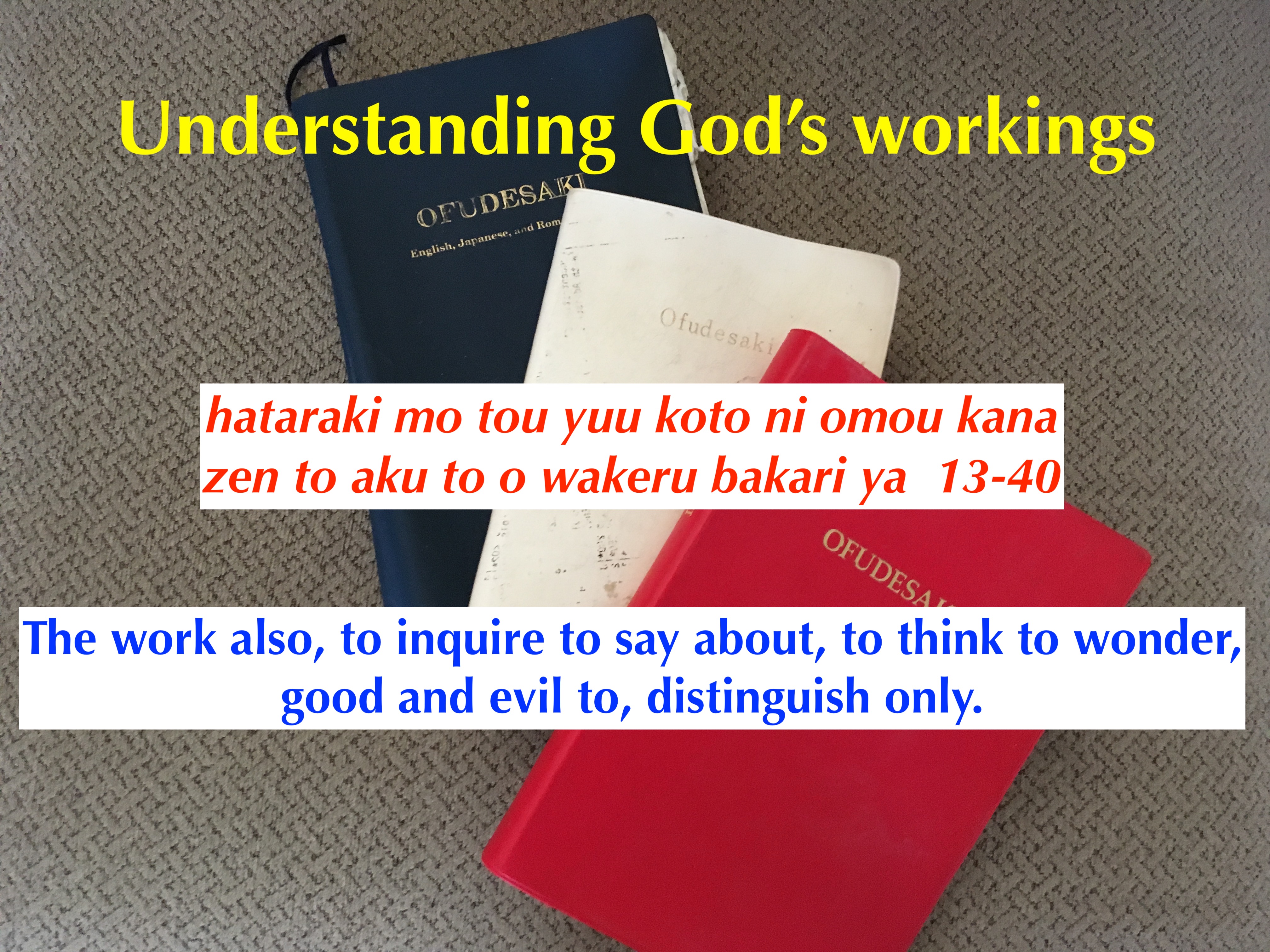
OFUDESAKI 13-40

God to distinguish good and negative thoughts by placing different illnesses, depending on the amount and kind of thoughts one has.

Posted in Tenrikyo | Leave a comment

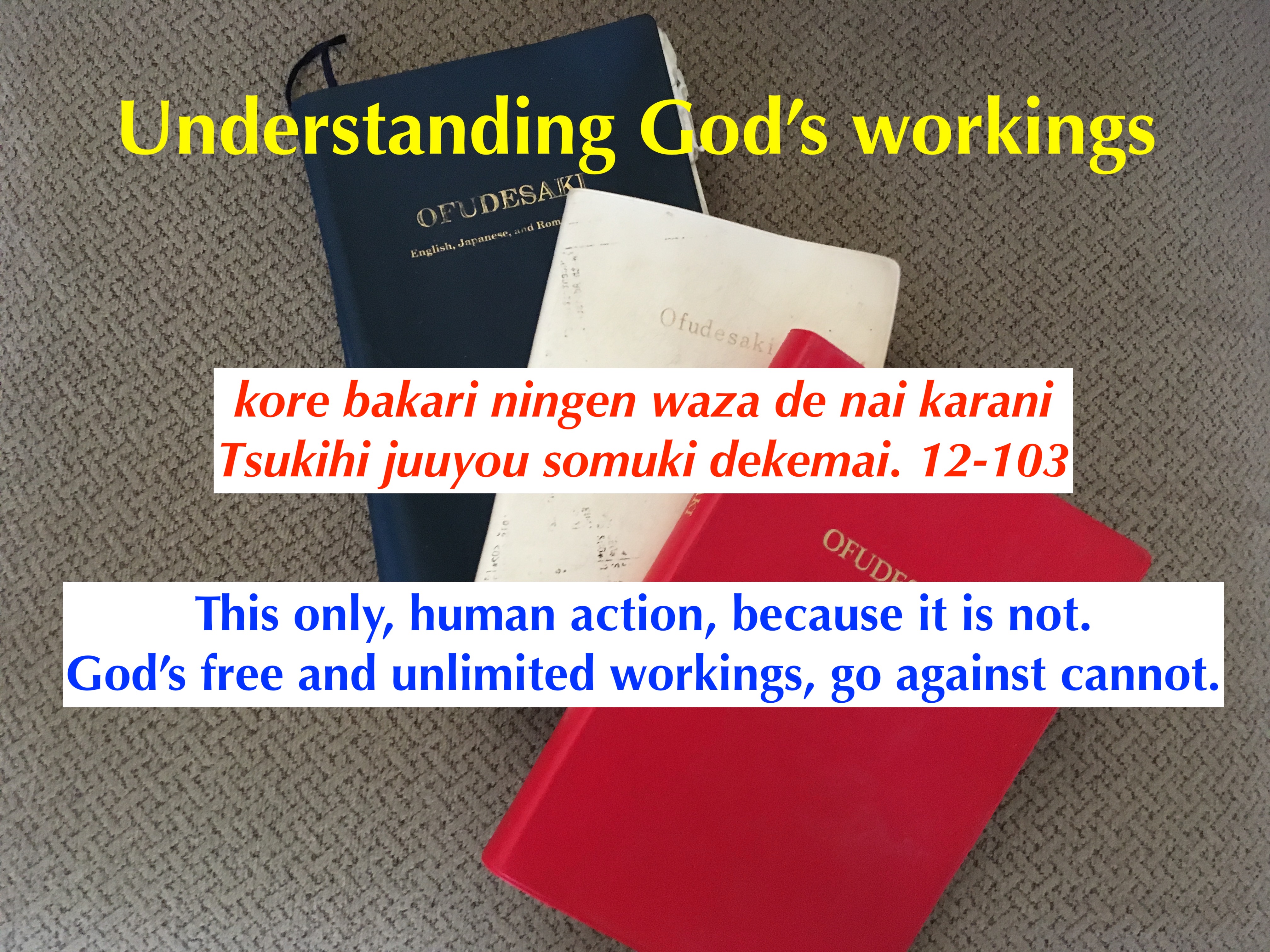
OFUDESAKI 12-103

Posted in Tenrikyo | Leave a comment