
Interpretation:
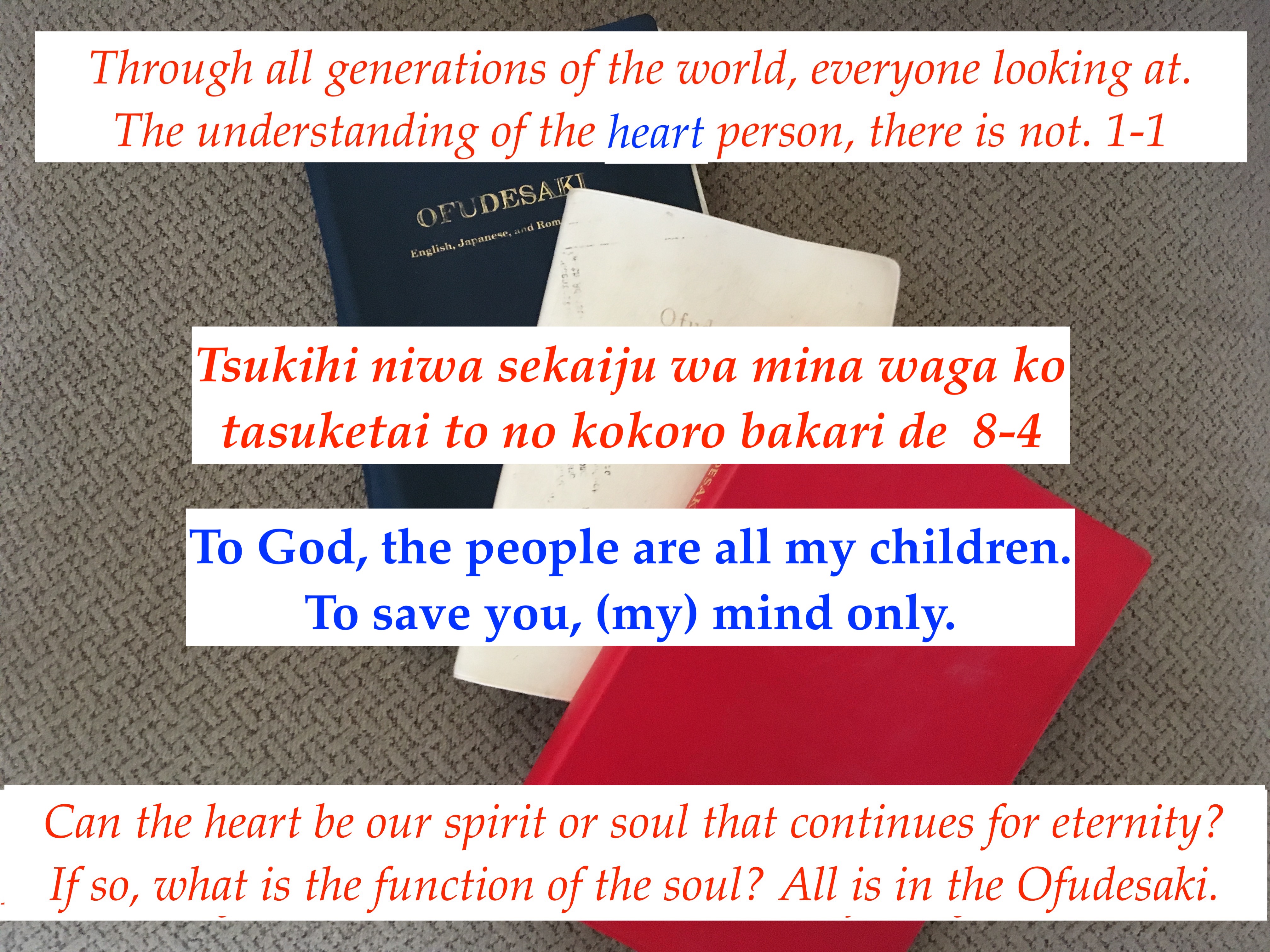
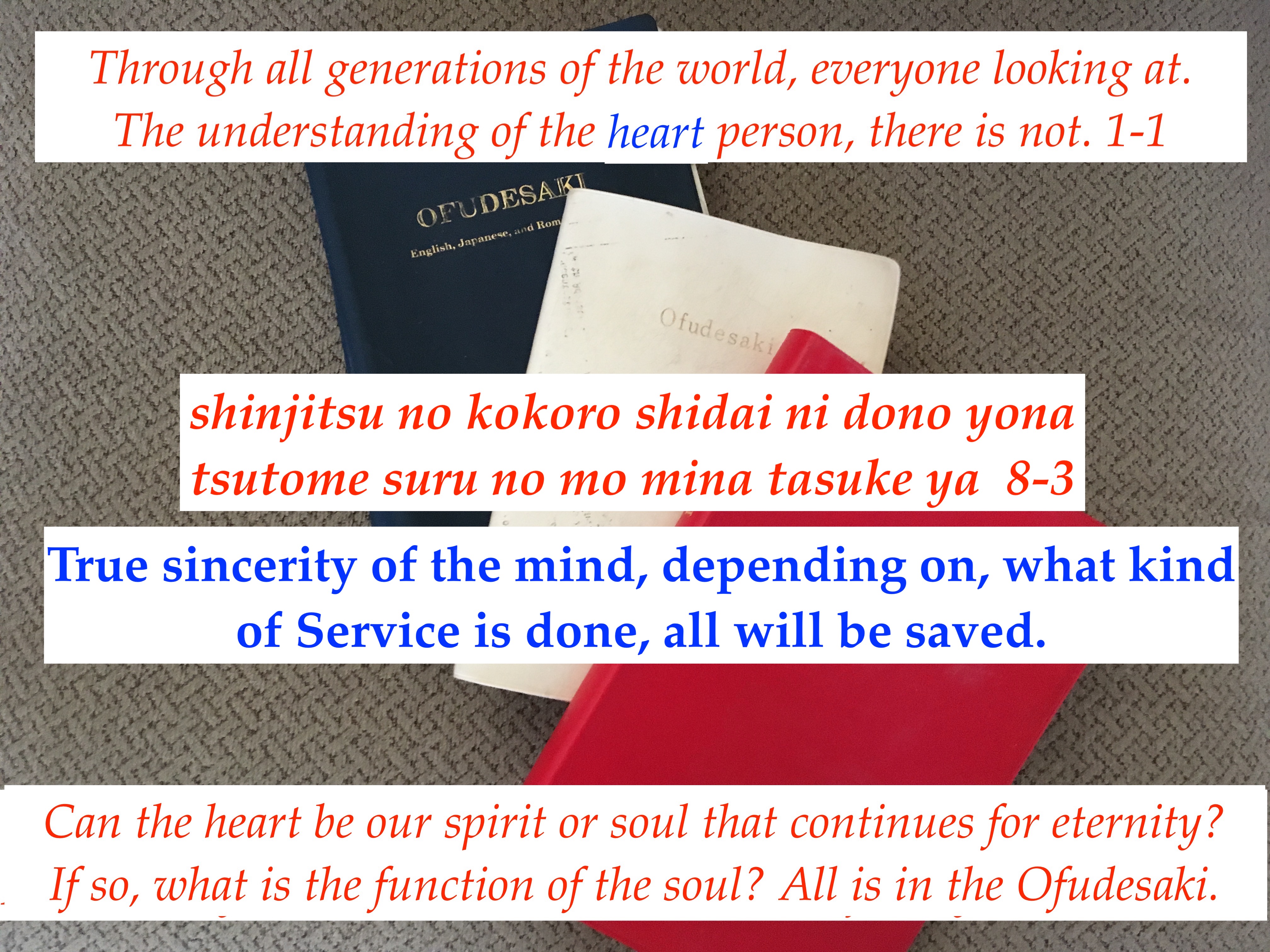
God created human beings. We are all children of God, and are brother and sisters. As parents, we all want are children to be happy. This is what God wants, and this is why God wants to save everyone in the world.
 Interpretation: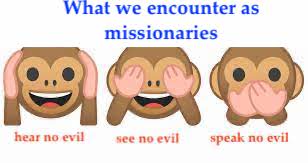
In the Ofudesaki, God tells us about dusts or evil thoughts in our minds. These dusts are regret (oshii), covetousness (hoshii), self-love (kawai), greed (yoku), and arrogance (koman). Some may argue, there are 8 dusts, but in the Ofudesaki only 5 are given. The image is about the popular 3 monkeys, showing the stubborn minds of the world. Which monkey or monkeys have you encountered in spreading God’s truth?
The first monkey does not want to listen about these evil thoughts.
The second monkey refuses to see what actions these evil thoughts lead to, like suffering of others, and eventually suffering to oneself (karma).
The third monkey does not want to acknowledge or speak about these dusts, or our evil actions. They do not want to admit that they have sinned.
What does this have to do with the Ofudesaki you may be wondering? We know how difficult it is to change people’s mind; the 3 stubborn monkeys represents this. But by following the instructions in the Ofudesaki, God tells us that God will begin to help people understand God’s teachings, including these evil thoughts in their minds. How would God help us? The answers are in the Ofudesaki. Will it include our Joyous Service?
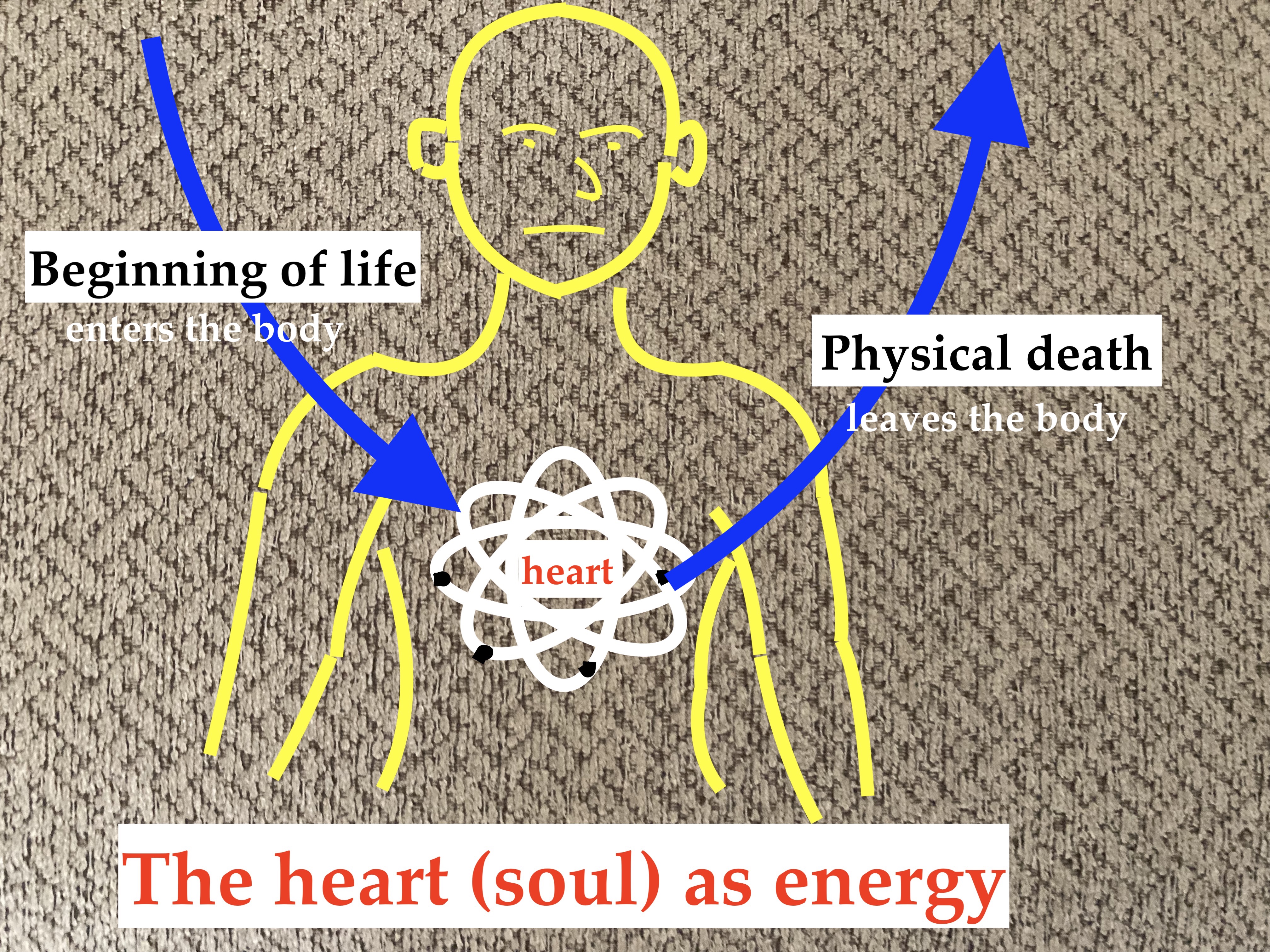
In the Ofudesaki God tells us that we do not understand the heart (mune). God tells us that when the world understands the heart, there will joy in the world. What is the heart, and what does it do. All this information is in the Ofudesaki.
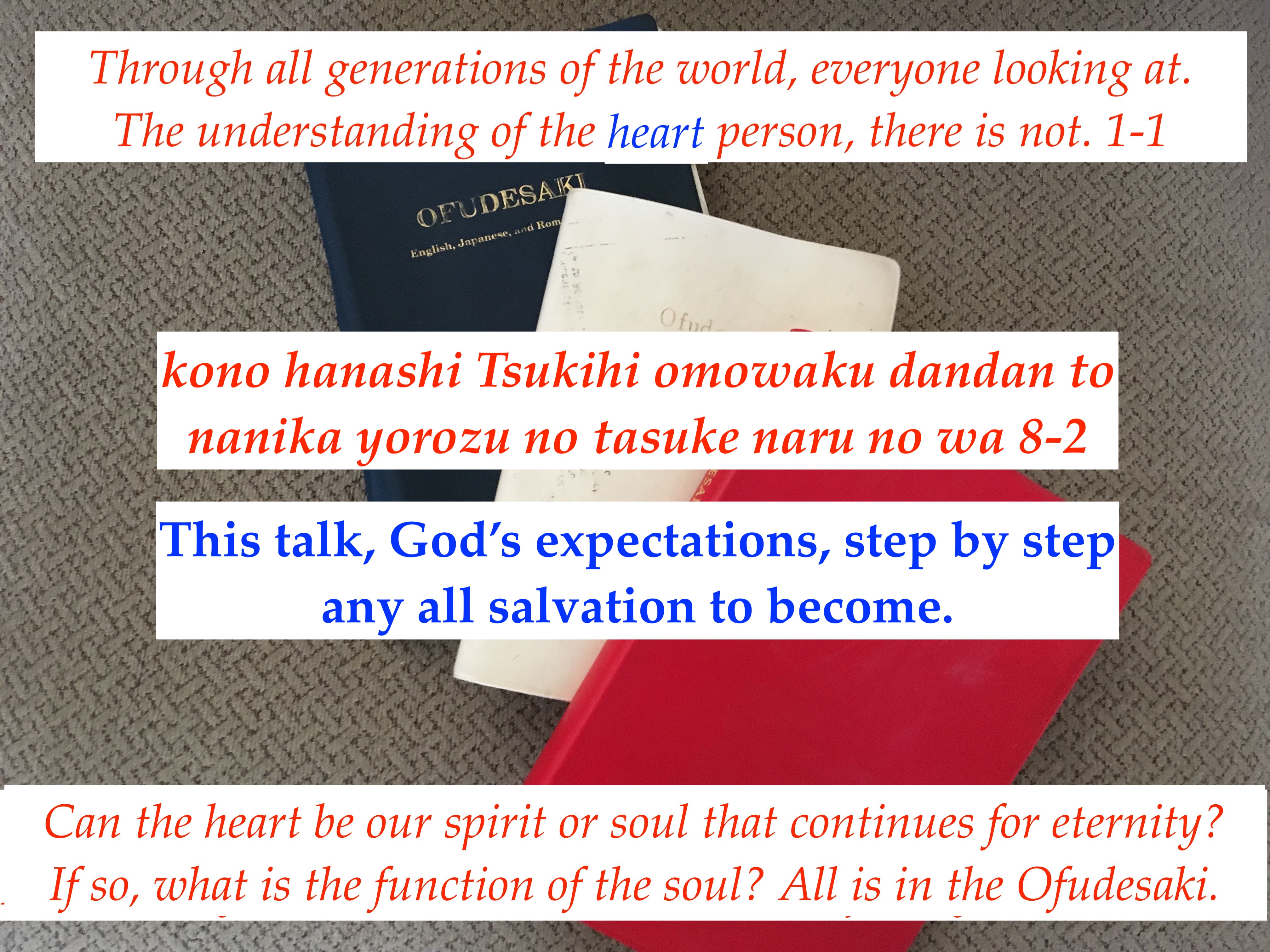
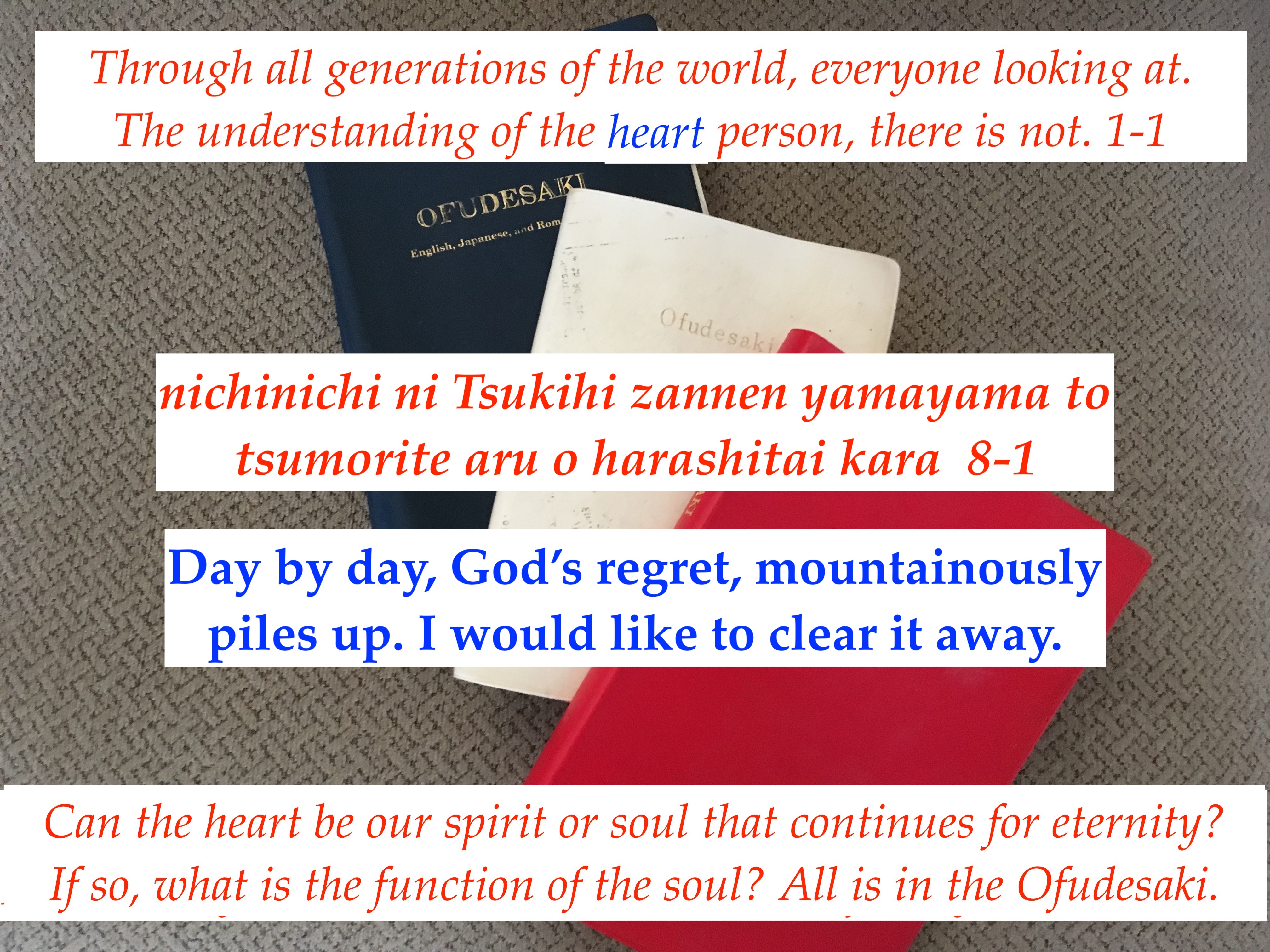
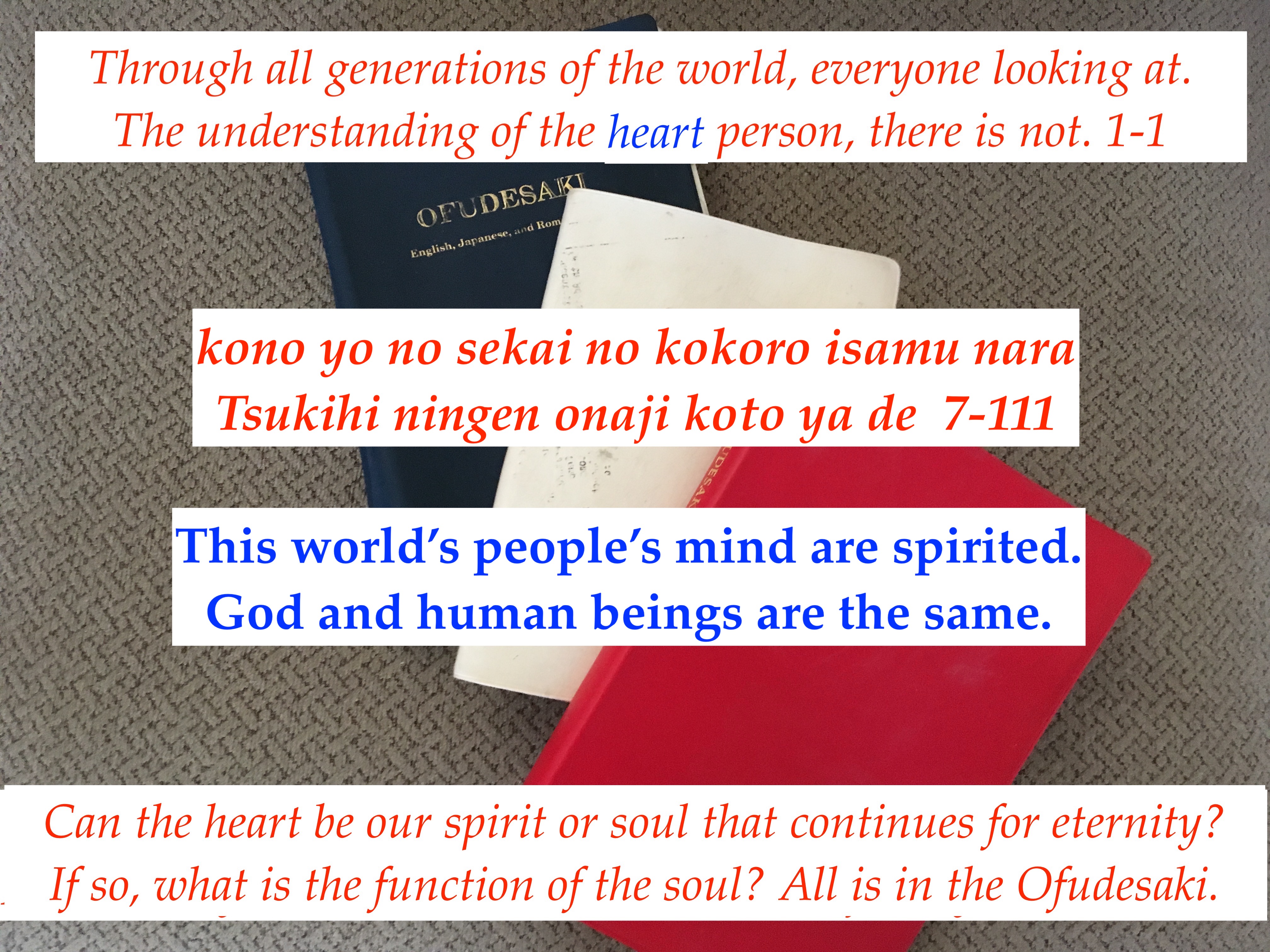
In the Ofudesaki, God directly tells us that God has been on the sidelines only observing us since the creation of human beings. This is referenced in the Ofudesaki a few times. God is said to have descended from heaven to save mankind from suffering, according to Tenrikyo teachings in 1838. Then one may ask, who or what caused suffering before this date?
One question that puzzles me is how God can observe and control over 7 billion people on this earth. Just for your amusement, there are 60 seconds in a minute. There are 3,660 seconds in an hour. There are 86,400 seconds in a day. And finally there is over 32 million seconds in a year. This averages .005 seconds that God may spend with each person every year!
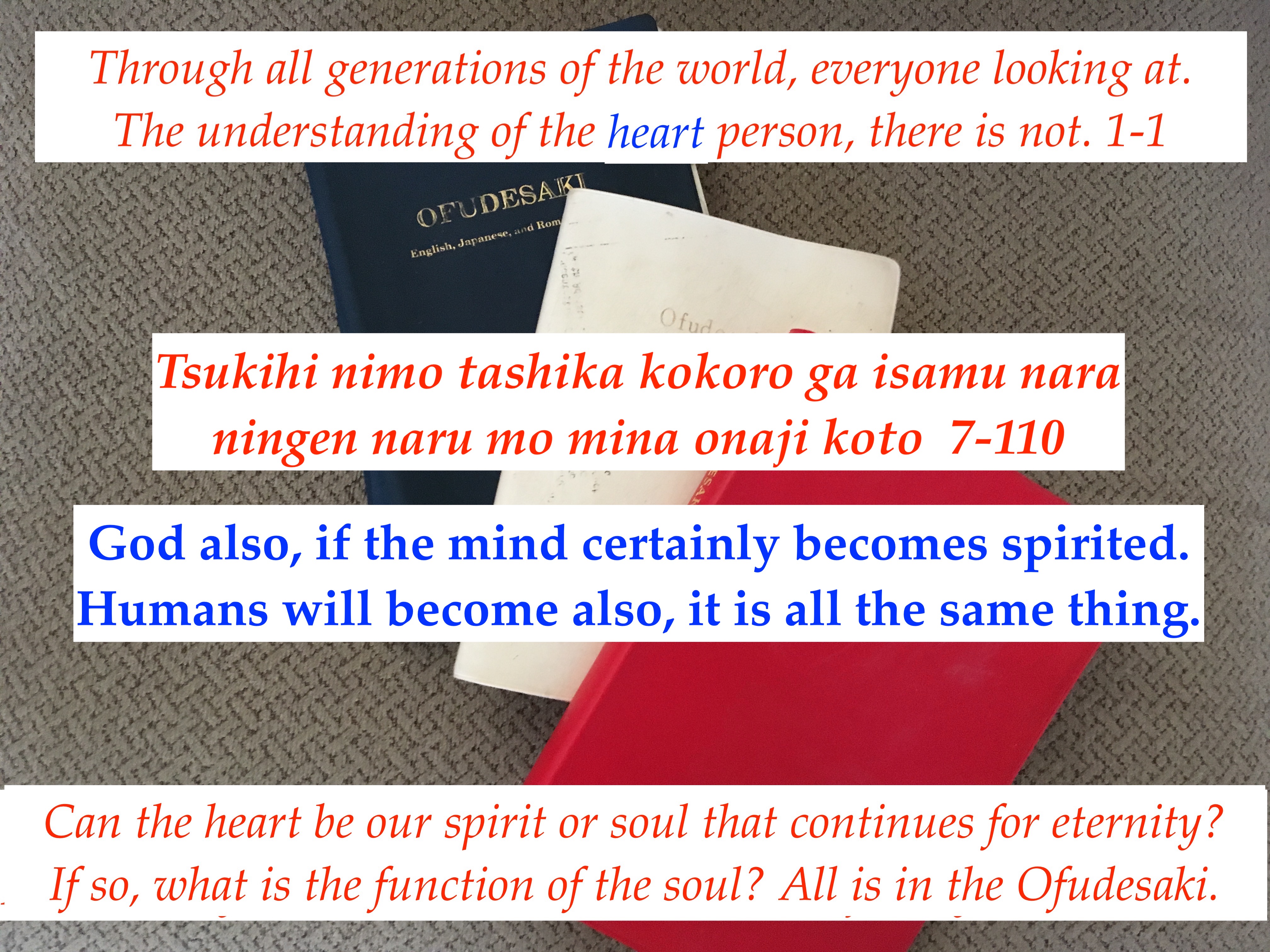
Some may say, there is no God, and that the agnostics are right. Or could there be a part of God in each of us? In the Ofudesaki, this may be inferred. In the first verse of our most sacred book, God tells us we do not understand the mune. Mune is translated as the heart, but it can be also translated as the chest. God also tells us to ponder what comes from our hearts. God tells us that our heart is like the sand that acts as a filter. From these explanations, we can deduce that the mune is not the physical heart or chest, but possibly an amalgam of energy that collects, stores, transfer, and distribute energy. Could this bundle of energy be the soul or spirit that people are familiar with? God has created the mune as a mechanism of self-regulation. We control our own destiny with our behavior because of our own heart.
Some may say that if the above is true, where does God come into play? In the Ofudesaki, God tells us that human beings were created to live the joyous life. But as we can see in the world today, there are people who deceive, rob, steal, control, covet, and hate; and there people who are giving, loving, sharing, and helping. These actions are the cause. We also see joy and suffering in this world. These are the effects. God descended from heaven to tell us the relationships because cause and effect. We reap what we have sowed, not because of God, but it is our own hearts that regulates our behavior. God is telling us that there is part of God in each of us that is guiding us to become good. This is why God tells us to ponder what comes from our hearts. We need to have a pure heart, which we are all capable of attaining. When are hearts are pure, only joy will emanate from them.

I would like to discuss the word “stupid”. Unfortunately this is a word I have often used in the past, and also it has been directed toward me. Webster defines stupid as:
Slow of mind, given to unintelligent decisions or acts
Wow, this word is insulting. No one would like to be referred to as slow of mind or making unintelligent decisions. If you want to incite anger in anyone, calling him or her stupid will do this. Inciting anger is not what God wants us to do, even if someone is confronting us. Might there be another or synonyms that we can convey without causing separation. Looking at the synonyms by Webster, they appear to be more debasing of character. Words like airhead, birdbrain, blockhead, bubblehead, chowderhead, and chucklehead are only a few synonyms in Webster. I would choose to use less confrontational words like silly or unreasonable. You may have other words to substitute. From my thinking, I hope not use the word stupid any more, and substitute silly or unreasonable when unreasonable people appear in my life. Yes, God tells us to ponder and not act on our mistaken thoughts; but sometimes we, especially myself, may not be strong enough to resist our evil thoughts. When this happens, silly or unreasonable may be the lesser of two evil words. If you cannot agree with my position, please don’t call me stupid, oops I mean silly.
 OFUDESAKI-GOD'S TEACHINGS