WE DO NOT UNDERSTAND THE OFUDESAKI

Understanding and Returning to the Core Teachings of the Ofudesaki

The message in the Ofudesaki is profoundly simple and clear: God desires that we attain a pure mind. This pure mind is one free of regret (oshii), covetousness (hoshii), self-love (kawaii), greed (yoku), and arrogance (kouman). When the mind is purified in this way, salvation is naturally received. From such a mind, only health, happiness, and joy arise—these are the workings of one’s own soul, as God teaches.

The Ofudesaki also guides us on how to share these teachings with the world. This is where the Youki-Tsutome plays a vital role. Through this prayer, we ask God to save the people to whom we have introduced the teachings. When God accepts our prayer, guidance may be given in the form of illness—not as punishment, but as a means for that person to come to understand the condition of their own soul. Through this process, they can begin purifying their own minds. This is how salvation spreads—not by force or numbers, but by each individual awakening to God’s truth.

However, it seems that today, some aspects of church leadership may have drifted away from the original intent of the Ofudesaki. If we are to fulfill God’s intention of world salvation, we must return to the foundational teachings—reading carefully, reflecting deeply, and aligning our practice with what is written.

This is not a criticism, but a heartfelt encouragement: that we all, together, renew our sincerity and strive to embody and spread the truth of the Ofudesaki. Only then can the teachings reach and resonate with the wider world.

おふでさきの教えは、非常にシンプルで明快です。親神様が望まれているのは、「心の浄化」です。すなわち、惜しい心(おしい)、欲しい心(ほしい)、かわいい心(かわいい)、欲(よく)、高慢(こうまん)といった心のほこりを取り除いた「すみきった心」に到達することです。健康やしあわせ、陽気ぐらしは、自らの魂の働きとして現れるのです。これは、親神様がおふでさきの中で教えてくださっています。

また、おふでさきでは、どのようにしてこの教えを世の中に広めるかも示されています。その要となるのが「よふきづとめ(陽気づとめ)」です。このおつとめは、私たちが教えを伝えた方々を、親神様にたすけていただくための願いそのものです。

すみきった心になることで人はたすかりますが、その人たちが心をすみきらせるように導くのが親神様のおはからいです。私たちの願いを親神様が受け取ってくださると、その方々に「病」を通じた「おしえ(さしづ)」が現れます。これは罰ではなく、自らの魂の働きを理解するための導きです。こうして人々が心を自ら浄めることに目覚めていくのです。これが、本来の意味での「教えの伝播」だと私は考えます。

しかしながら、現代の天理教の指導体制においては、このおふでさきのご指示が十分に実践されていないように感じられます。その結果として、私たちの信仰が世界の中でごく一部の人々にしか届いていないのではないでしょうか。

これは決して非難ではなく、私たち皆が心を合わせて、本来の教えにもう一度立ち返るための呼びかけです。おふでさきの教えを丁寧に読み、深く味わい、日々の実践に活かしていくことが、親神様の望まれる「世界たすけ」の実現につながると信じております。
Posted in Tenrikyo | Leave a comment

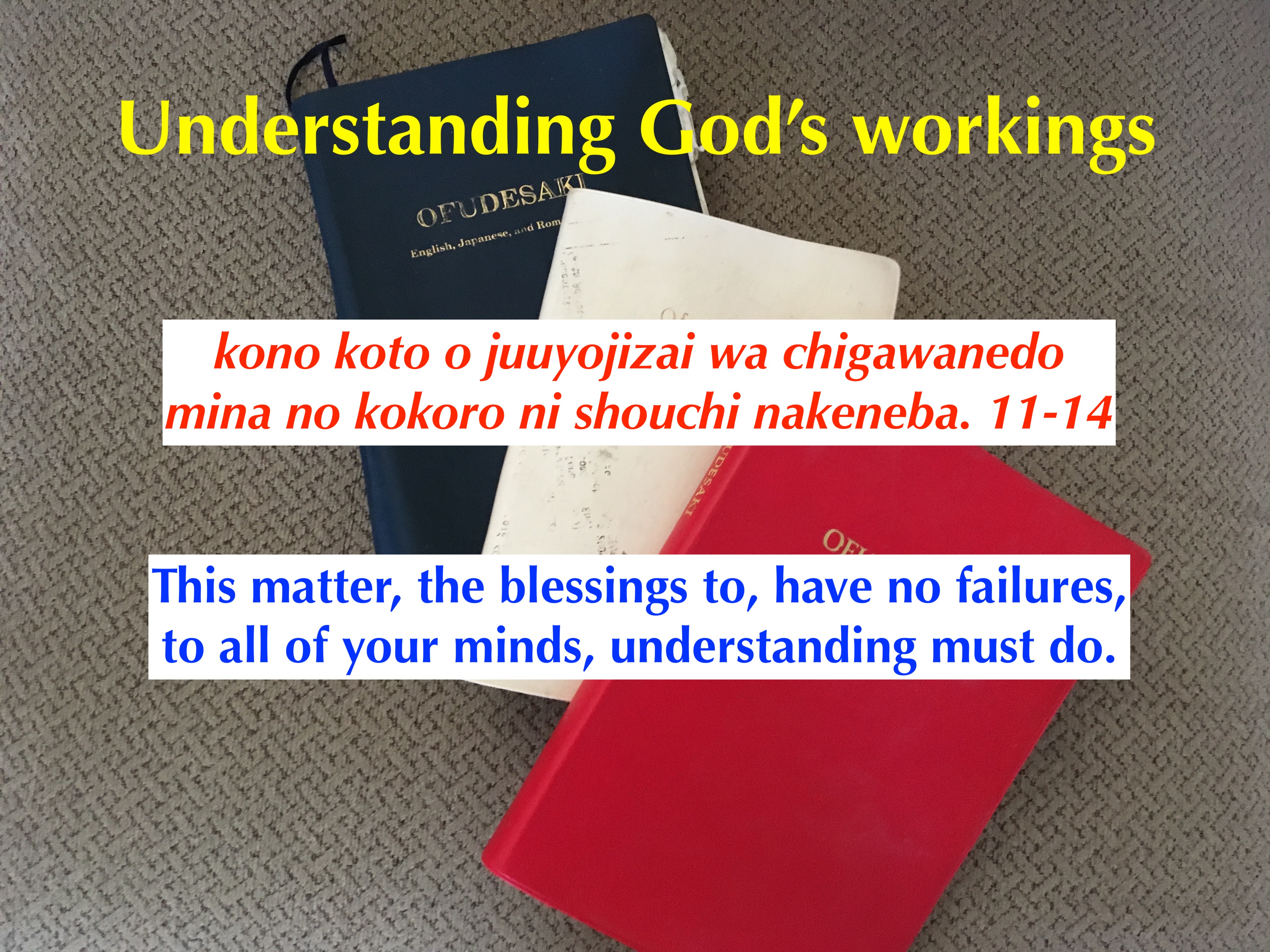
OFUDESAKI 11-14

When blessing of guidance appears on your body, you must understand why it appears.

Posted in Tenrikyo | Leave a comment

Something to Ponder

A HUMBLE REQUEST REGARDING THE INTERPRETATION OF “MUNE” IN THE OFUDESAKI
To the respected leadership of the Tenrikyo Church,
I would first like to express my sincere gratitude for your continued efforts in preserving and sharing the teachings of Tenrikyo around the world.
There is a question that has been in my heart for some time:
Could we revisit the interpretation of the word “mune” in the Ofudesaki, particularly in the very first verse?
THE FIRST VERSE OF THE OFUDESAKI
The Ofudesaki opens with these sacred lines:
Yorozuyo no sekai ichiretsu miharasedo
mune no wakarita mono wa nai kara (1:1)
The official English translation provided by Church Headquarters reads:
Looking all over the world and through all ages,
I find no one who has understood My heart.
However, a more direct, literal translation might be:
Of all ages and all people in the world, even when looking out,
There is no one who has understood the soul.
IS “MUNE” GOD’S HEART OR THE HUMAN SOUL?
This raises an important question:
What does the word “mune” truly refer to in this verse?
Is it God’s heart—as the current translation suggests—or is it the human soul?
This question is not merely linguistic—it has deep implications for how we understand the entire Ofudesaki. If we interpret mune as God’s heart, many verses throughout the text become difficult to interpret clearly.
But if we understand mune as the soul within each of us, the teachings throughout the Ofudesaki begin to align and make profound sense.
For example, phrases like:
  • “mune no uchi yori” (from within the mune)
  • “mune ni tamaru” (accumulates in the mune)
  • “mune no shigumi” (arrangement of the mune)
…all point naturally to the idea that mune is a part of us—our soul—not God’s inner feelings.
UNDERSTANDING THE SOUL: THE KEY TO THE OFUDESAKI
The Ofudesaki teaches that our soul:
  • Monitors our thoughts and behavior
  • Gathers the consequences (demerits) from our negative actions
  • Stores these as fate or karmic seeds
  • Manifests them back to us as illness or hardship, when the time is right
Sometimes this return does not occur in the present life, but in the next.
Simply put:
We reap what we sow, and our own soul is the one that keeps the record.
This is a central teaching that appears again and again throughout the Ofudesaki, and it depends on our correct understanding of the word mune.
A SINCERE SUGGESTION
I do not claim to have all the answers, nor do I wish to criticize the long-standing traditions or translations that have supported the faith for generations.
Rather, I humbly and respectfully suggest:
Let us return once more to the original verses of the Ofudesaki, and consider whether there is room for deeper reflection on the meaning of “mune.”
This conversation could help clarify the core message of Tenrikyo and bring us closer to the true intention of God’s revelations.
LOOKING AHEAD: WHAT IS “SHINJITSU”?
In this same spirit of respectful dialogue, I would like to raise a second question in the near future:
What does the word “shinjitsu” (真実) truly mean in the Ofudesaki?
Like mune, this word appears frequently and may hold deeper layers of meaning than commonly assumed.
Thank you very much for your time and consideration.
With deepest respect and hope for continued understanding,
おふでさきの第一節についてのご提案とお願い
天理教の教えに日々尽力されている皆様に、深い感謝と敬意を表します。
私は、教祖が残された最も神聖な御教えである『おふでさき』を深く学ぶ中で、「むね」という言葉の解釈について、少し検討していただきたいと思うようになりました。
たとえば、『おふでさき』第一号第一節には以下の御文があります:
(yorozuyo no) (sekai ichiretsu) (miharasedo)
(mune no wakarita) (mono wa nai kara) 1-1 Ofudesaki
現在の教会本部の公式英訳では、
Looking all over the world and through all ages,
I find no one who has understood My heart. 1-1 Ofudesaki
しかし、直訳に近い形で読んでみると、
Of all generations, the world everyone, looking at,
the soul’s understanding, person is nonexistent because, 1-1 Ofudesaki
つまり、
「世界中を見渡しても、“魂(tamashii)”を理解した人がいない」
という意味にも取れるのではないかと感じています。
むね=神の心?それとも人の魂?
ここで重要になるのが、「むね」という言葉の本来の意味です。
それが「神様の心」なのか、「人間の魂」なのかで、『おふでさき』全体の理解が大きく変わってきます。
実際に、『おふでさき』の中には「むねのうちより」という表現が何度も出てきます。
この「むねのうちより」とは、何が出てくるのでしょうか?
私は、「むね」とは人間一人ひとりに宿る魂のことであり、
そこから出てくるのは「その人が積んできた因縁や運命(ふし・しぐみ)」であると解釈しています。
なぜ「むね」の理解が大切なのか?
『おふでさき』を通読すると、「むね」を「神の心」と訳すと意味が通じにくい箇所が多くあります。
逆に、「むね=魂(人間の内なる存在)」と捉えることで、御文全体の意味が一貫し、
神様の教えが「自分の魂を理解し、心を澄まし、陽気ぐらしへと至る道」として、はっきりと浮かび上がってくるように感じるのです。
私たちの魂は、日々の行いを見て、「心のほこり」からくる行動に応じて や「でめりっと(因縁)」を蓄積し、
それが適切な時機に「ふし」や「しぐみ」として現れてきます。
これは時に、来世にまで持ち越されることもあります。
つまり、**「蒔いた種は、必ず自分に返ってくる」**のです。
この因果の仕組みを教えてくださっているのが、『おふでさき』なのではないでしょうか。
謙虚なお願い
このような理解は、私自身が『おふでさき』を原文のまま、繰り返し丁寧に拝読する中で得たものです。
私は決して、教会の伝統や信仰の形を否定したいのではありません。
ただ、神様が残してくださった「直筆の御教え」そのものに、いま一度立ち返りたいという一心でお伝えしています。
ぜひ、ご多忙とは存じますが、
『おふでさき』第一号第一節の「むね」について再検討いただければと心より願っております。
次回のテーマ:「しんじつ」とは?
この流れで、次に深く掘り下げたいのが、『おふでさき』に多く出てくる言葉「しんじつ(真実)」の意味です。
これもまた、信仰の核心に迫る重要なキーワードだと考えております。
どうか今後も、御教えの原点に立ち返る対話が生まれていくことを願ってやみません。
Posted in Tenrikyo | Leave a comment

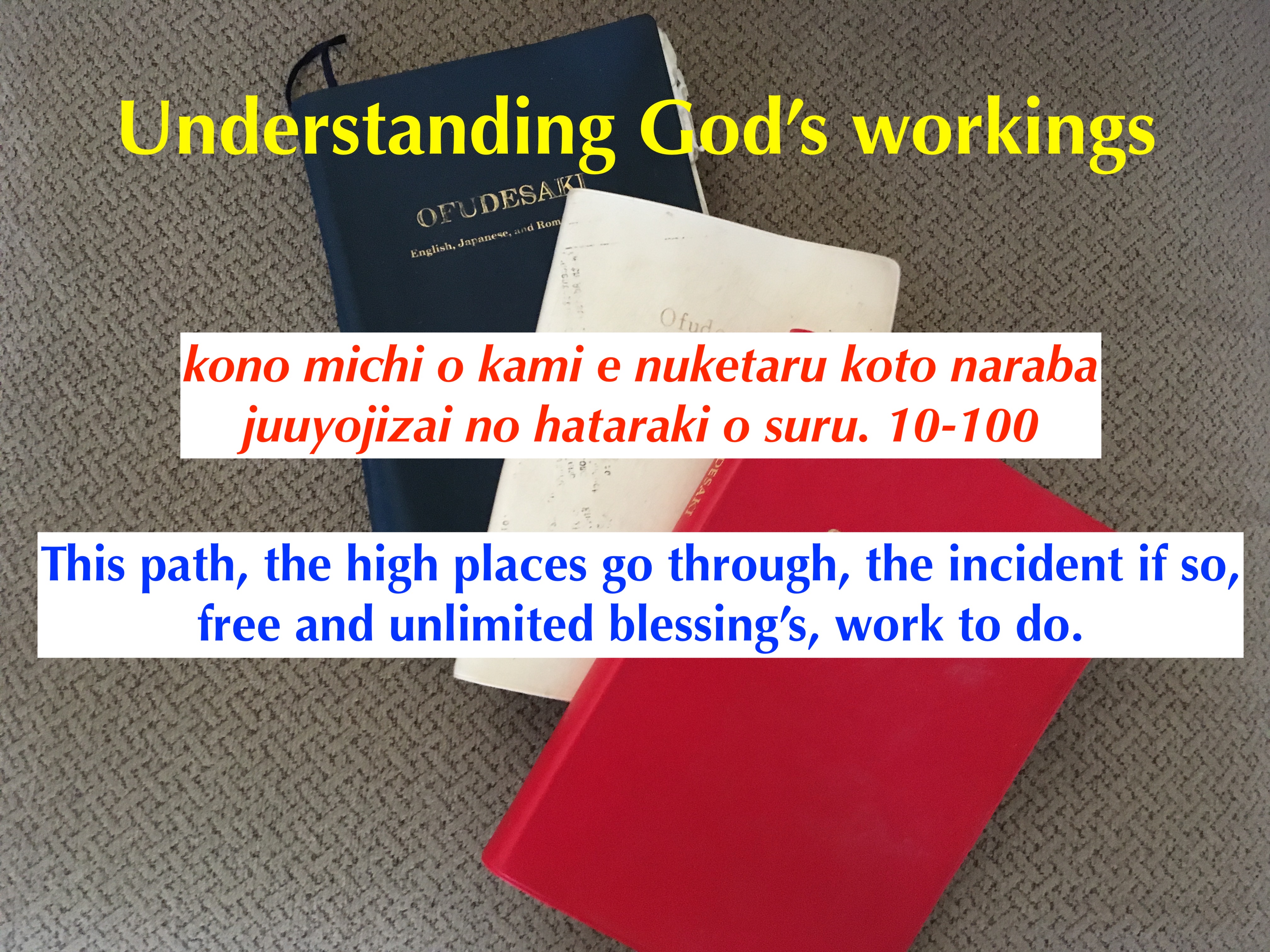
OFUDESAKI 10-100

Posted in Tenrikyo | Leave a comment

What is the Purpose of Religion


What Is the Purpose of Our Religion?

What Is the Message We Want to Share with the World?

Before we talk about the solution, let’s be honest about what our religion is currently telling people.

When newcomers ask us about the Joyous Life, we tell them it is the goal. But to reach it, we often tell them they must:

  • Offer donations,
  • Learn and perform the Yorozuyo and 12 hand dances,
  • Make pilgrimages to Japan,
  • And even follow the Hinagata (model path) of the Foundress for three years.

While these practices are sacred and meaningful to some, most people today struggle to relate to or commit to these actions. As a result, many lose interest or feel the religion is too distant or difficult to follow.


So What Is the Solution?

My answer is simple:
Read the Ofudesaki, as it was written—without reinterpretation or institutional filters.

The Ofudesaki gives us clear, divine instructions on how to:

  • Live the Joyous Life, and
  • Spread that joy and truth to others.

What Does the Ofudesaki Really Teach Us?

It teaches us to understand our own soul.
It is the soul that monitors our behavior and stores the consequences of our thoughts and actions.
We reap what we have sown—not because God punishes us, but because our own soul returns to us what we have planted.

This process is what some call karma, and it continues even through reincarnation for those who have not yet purified their minds.

But here is the central message of hope:
If we purify our minds, we are saved.
From our own souls will come nothing but health, happiness, and spirited living.

Simply put:

If we are good, if we work on removing our negative thoughts, we will live in joy and be spirited each day.

This is the message that Tenrikyo leaders must share with the world.


The Special Prayer: Youki-Tsutome

God understands how difficult it is for people to abandon long-held beliefs or habits. That’s why God gave us a special form of prayer:
The Youki-Tsutome, the Joyous Service to save others.

This is not the Yorozuyo or the Twelve Songs.
It is a prayer asking God to place illness as guidance, not punishment, for those to whom we’ve spread the teaching of the soul and the pure mind.

God gives guidance through illness in proportion to the type and amount of negative thoughts a person holds. These thoughts—if left unchecked—would eventually manifest as suffering.

In essence, God is showing people their future, giving them a chance to change it.

If they recognize this guidance and come to places of worship, they can receive not only healing, but understanding—of their soul, their mind, and the path to the Joyous Life.

Through this process, they will learn to purify their minds by themselves, and live in health and happiness.
This is how the teachings are meant to spread.
Sadly, this is not happening today—and that must change.


Final Words

If you doubt what I’m saying, please read the Ofudesaki for yourself.
Do not rely only on interpretations or traditions.
The truth is there—clear, direct, and divine.

私たちの宗教の目的とは何か?

私たちが世界に伝えたい最も大切なメッセージとは?

まず、「解決策」に入る前に、現状の宗教の伝え方について率直に見てみましょう。

新しく教えに触れた人が「陽気ぐらしをしたいのですが、どうすればいいですか?」と尋ねると、私たちはこう答えることが多いです:

  • お供え(お金)をすること、
  • よろづよや十二下りの手踊りを覚え踊ること、
  • 日本への「おぢばがえり(里帰り)」をすること、
  • そして教祖のひながたに倣って三年間修行すること…。

これらは信仰において意味のある行いではありますが、現代の多くの人々にとっては非常に難しい課題に感じられ、結果として宗教に興味を失ってしまう人も少なくありません。


では、解決策は何か?

私の答えはとてもシンプルです:
『おふでさき』をそのまま読むこと。現代の解釈や制度的な解釈を通さずに読むことです。

『おふでさき』には、以下の二つが明確に書かれています:

  • 陽気ぐらしを実現するための教え
  • その教えを他人に広める方法

『おふでさき』は私たちに何を教えているのか?

それは、自分自身の魂(むね)を理解することの大切さです。
魂は私たちの心の働きを見守り、思考と行動の結果を「因縁」として蓄積していきます。
つまり、私たちは自ら蒔いた種を自らが刈り取っているのです。

これがいわゆる「カルマ」であり、魂が浄まっていなければ、来世に持ち越されることもあります。

しかし、ここに神様からの希望があります:
心を澄ませば、救われる。
魂から返ってくるものは、健康と幸福だけになります。

簡単に言えば、

私たちが「良い人」であれば、毎日を健康で陽気に生きられるのです。

これこそが、天理教の指導者たちが世界に伝えるべきメッセージなのです。


特別なつとめ:ようきづとめ(陽気づとめ)

神様は、人が長年信じてきた他宗教の教義を手放すことが難しいとご存じです。
だからこそ、神様は私たちに特別な祈りを授けました。
それが 「陽気づとめ(ようきづとめ)」 です。

これは「よろづよ」や「十二のてをどり」ではありません。
他人の心を澄ますようにと神様にお願いするための祈りです。

このつとめを通して私たちは、神様に対してこう願います:

教えを伝えた人に対して、魂と心を知るように、病(やまい)という「おしえ(ぢば)」を与えてください

この「おしえ」は、その人の心にある悪しき思考の量と質に応じて現れるのです。
それは、もし放置されれば、いずれ苦しみ(因縁)として現れる種なのです。

つまり、神様はその人に「未来の姿」を先に見せてくださっているのです。

その人がこの神様の「おしえ」に気づいたならば、教会や集会所に足を運び、癒しを求めることでしょう。
そして、魂や純粋な心のことを学び、自分自身で心を澄ましていく力をつけるのです。

これこそが、教えが世界に広まる「本来の姿」なのです。
しかし、残念ながら今はその通りにはなっていません。


最後にお伝えしたいこと

もし、私の話に疑問を抱かれるならば、
どうかご自身で『おふでさき』を読んでください。

解釈を通さず、原文そのままを。
そこには、明確で直接的な、そして愛に満ちた神様の言葉が記されています


Posted in Tenrikyo | Leave a comment

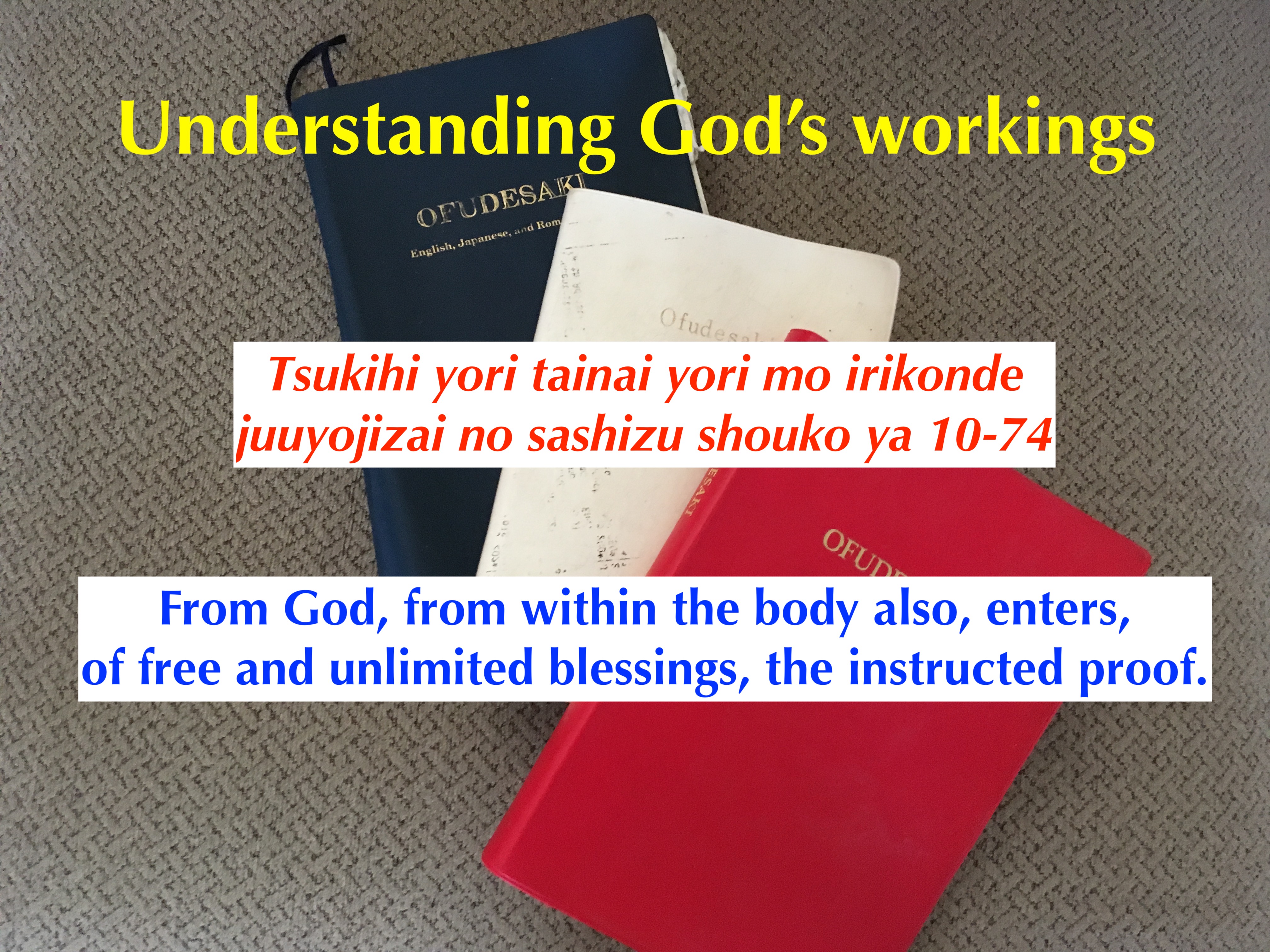
OFUDESAKI 10-74

Posted in Tenrikyo | Leave a comment

OFUDESAKI 10-37

This concerns the instruments used in the creation of human beings. God purifying their minds, in preparation to perform the Kagura SERVICE.

Posted in Tenrikyo | Leave a comment

Spreading God’s Truths

Posted in Tenrikyo | Leave a comment

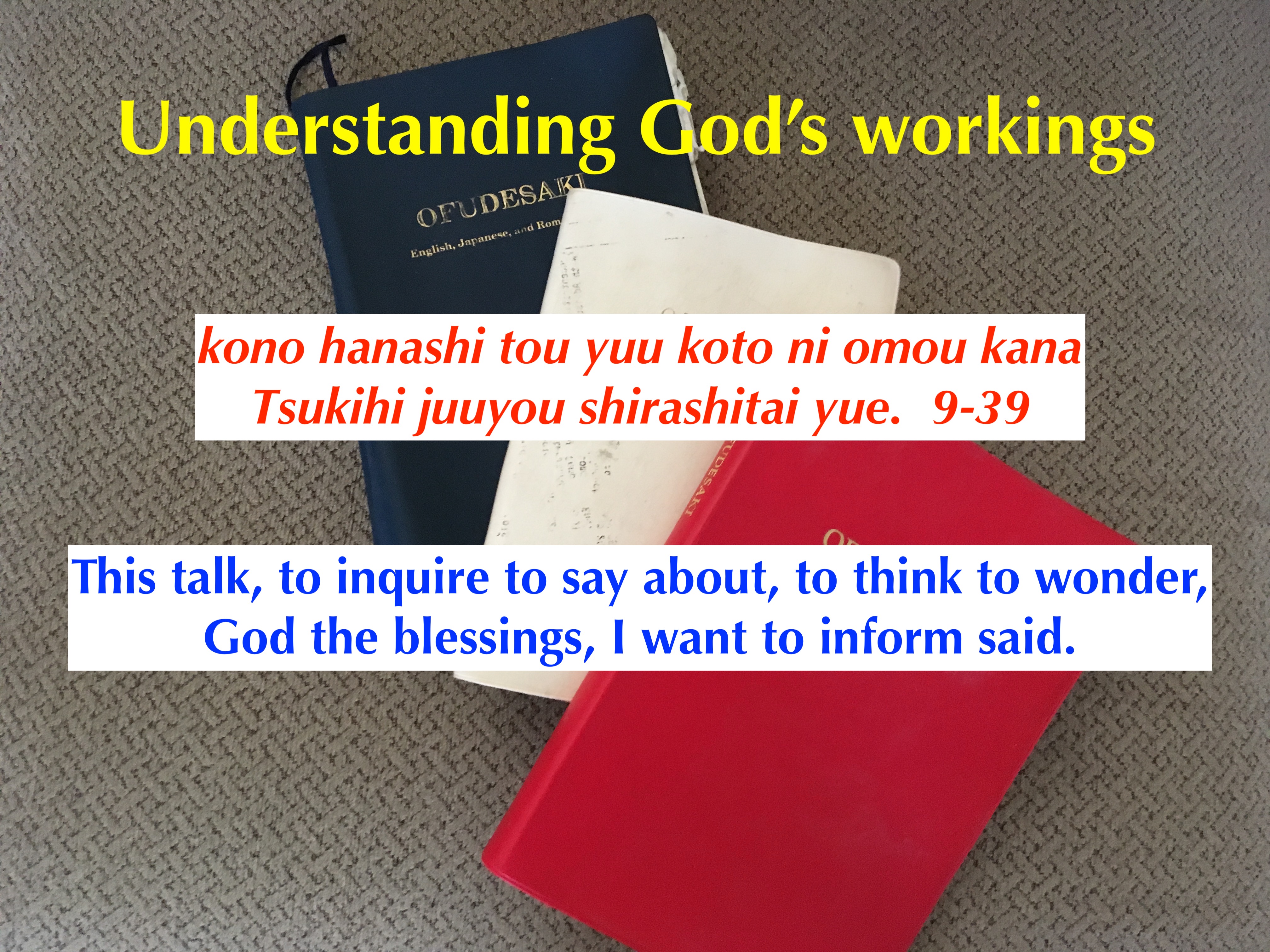
OFUDESAKI 9-39

Posted in Tenrikyo | Leave a comment

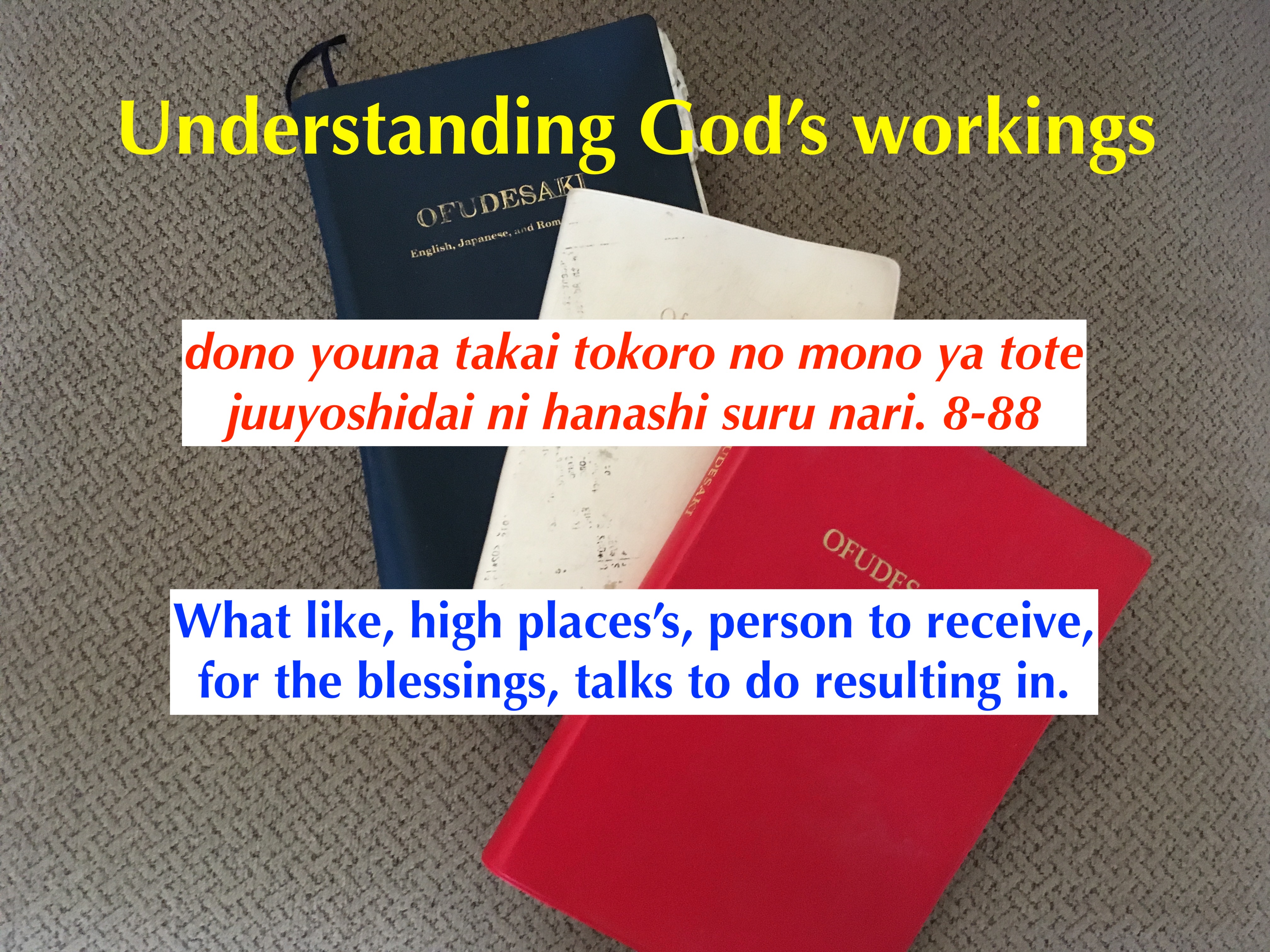
OFUDESAKI 8-88

For God’s guidance to be effective, we must spread the teachings to others first.

Posted in Tenrikyo | Leave a comment